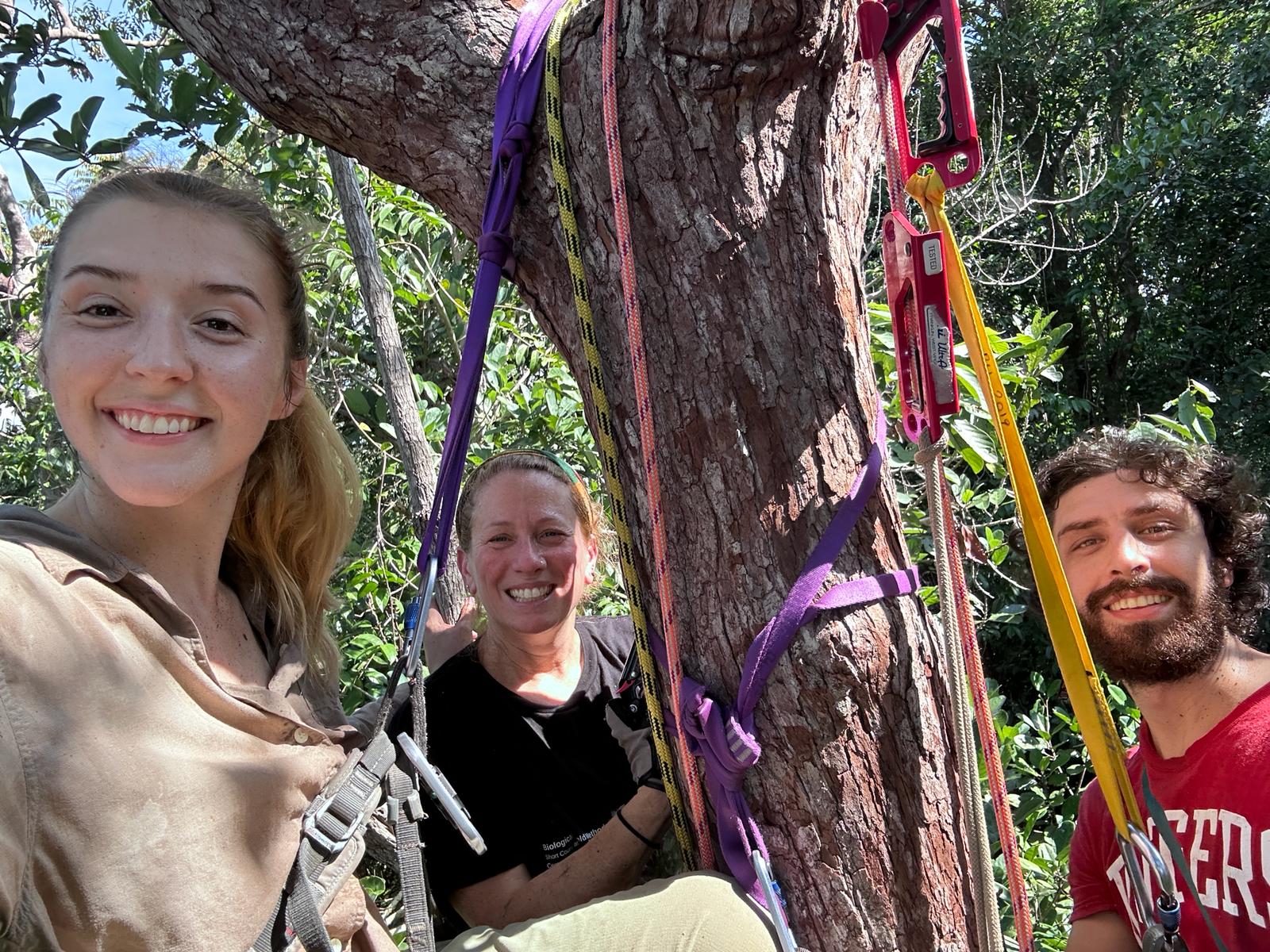
I arrived at the Tuanan Orangutan Research Center in the Kapuas region of Central Kalimantan in October 2022. My work was to assist the dissertation research of PhD student, Will Aguado, and the long-term research of the station. I had also been told I was able to create a project of my own. Upon arrival I still had no idea what I would choose.
The Tuanan Orangutan Research Station is about a mile from the nearby village of Pasir Putih. Home to approximately 80 villagers, the population includes the employees of the station and their families.
On one of my first trips into Pasir Putih, Will and I were chatting with some of the men, including the head of the village. At this point I had only spent about a month in the country, and my Indonesian language skills were still spotty. After the chit chat progressed past the point of my comprehension, I turned my attention to the shy children I kept catching peeking around corners to look at me.
Many of the young kids had not spent much time around ‘bule’, their word for foreigners. Our Tuanan cohort was the first at the Tuanan Research Station since COVID had begun. This meant it had been years since there was a permanent presence of ‘bule’ in the area and the kids were curious. Luckily, I had come prepared.
I pulled out colored pencils, stickers, and a coloring book and soon was surrounded by seven or eight children. They were excited and chatty. We were teaching each other colors in our native tongues. Within ten minutes they all knew at least five English words: red, green, blue, yellow, and pink.
The villagers present had watched the interaction and soon had a request for me. Would I come to the village and teach their children English? My answer was an immediate yes.
Fridays were my day off. So, I swapped my swamp boots out for tennis shoes and went into the village. I was overwhelmed by the turn out. My first class had almost every child in the village attending, ranging from ages 4 to 19.
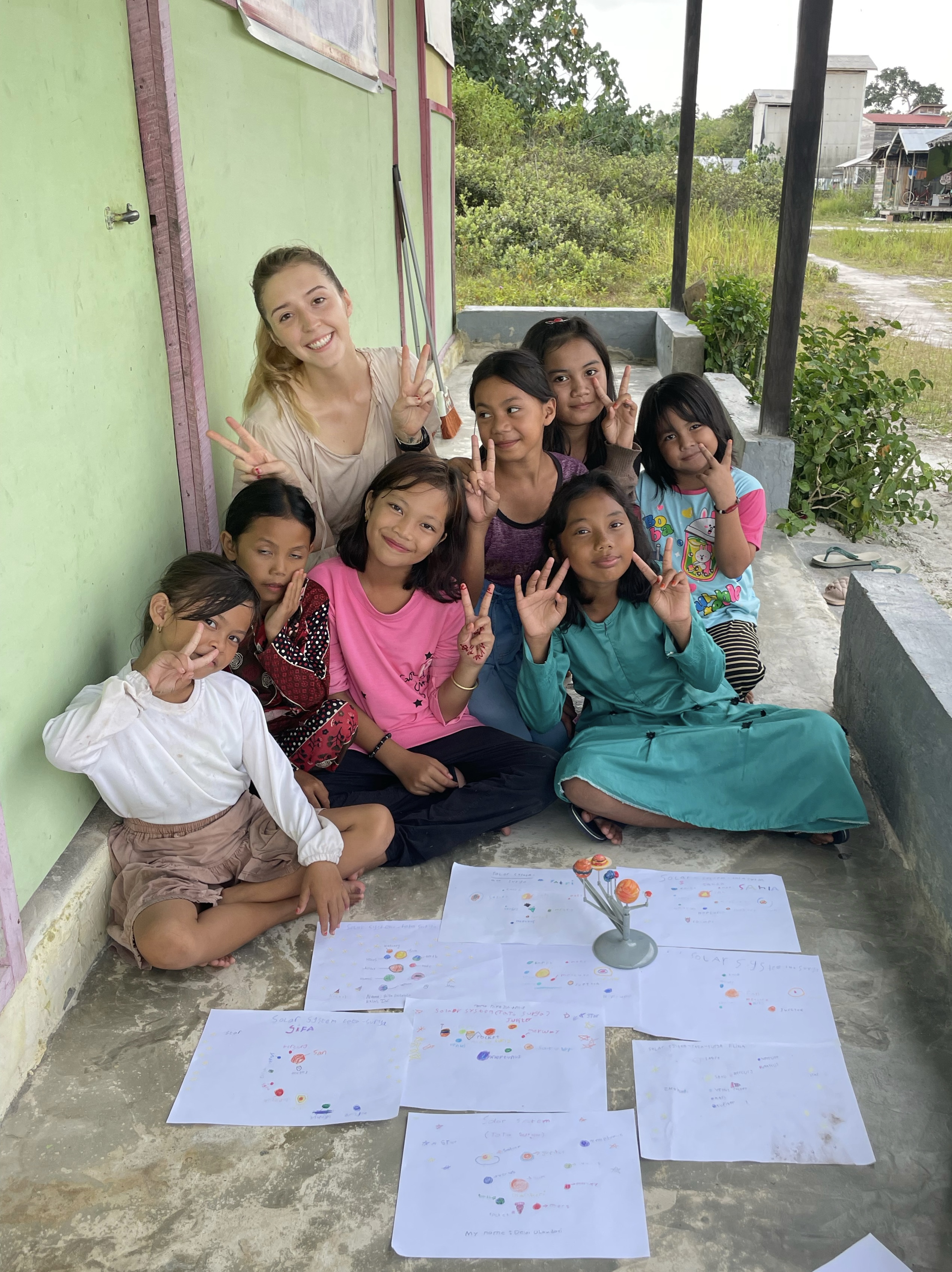
Each week was a different lesson topic. We covered numbers, destinations, verbs, body parts, nature vocabulary, pronouns etc. All while using fun action-packed activities to keep them engaged – they absolutely loved singing the hokey pokey!
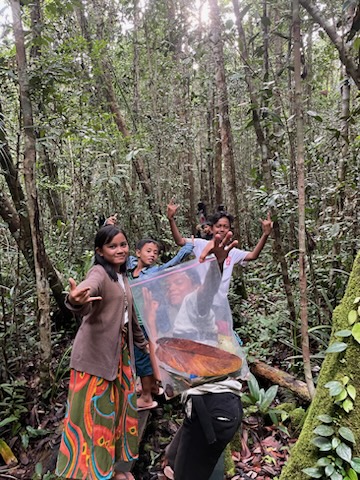
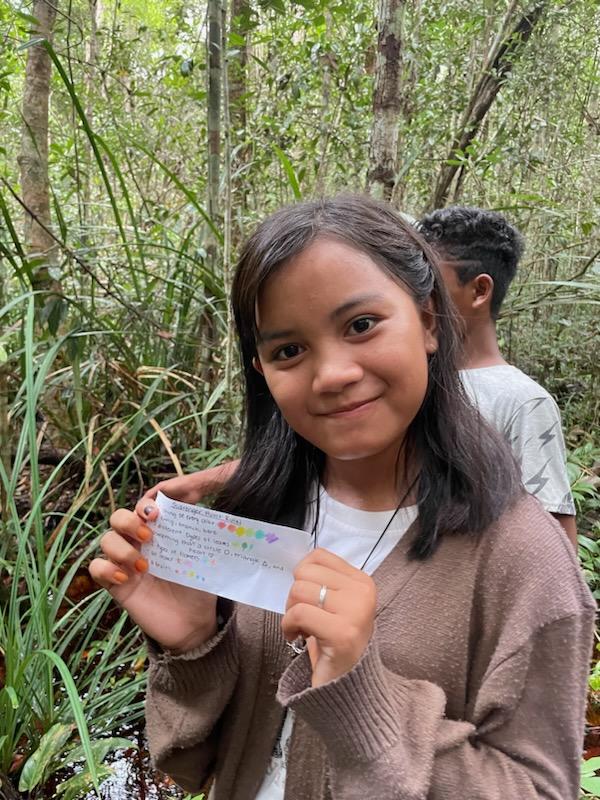
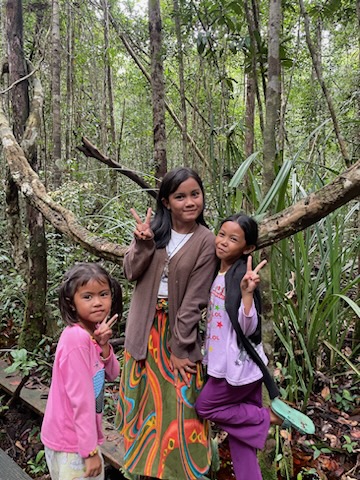
One week I organized all the children to come to the research station and made a scavenger hunt in the forest. The children were split into teams, each needing to find as many items on their list as they could. The list was written in English and included categories such as: five different types of leaves, an insect, purple flowers, and more. This meant they had to use their English vocabulary to remember their tasks and were learning about the forest in the meantime.
Many of the villagers were skeptical of this activity because they thought that the kids wouldn’t care about the forest. They were too wrapped up in their phone games and TikTok – yes I can confirm that TikTok has made it even to the jungles of Borneo. But they loved it, and asked for weeks afterwards when we could have class in the forest again.
They had an appetite for learning, but I was not equipped to teach them as well as I hoped. Some children occasionally came to class with a pencil and paper, but most didn’t have any supplies. This made it difficult for them to retain information, develop writing and reading skills, or study outside of class. Also, student ages ranged widely, meaning it was difficult to keep everyone on task while making sure the younger children were keeping up and the older children were still engaged. The white boards in the school were stained, old, and writing was almost illegible. Giving high quality lessons was next to impossible without the proper tools.
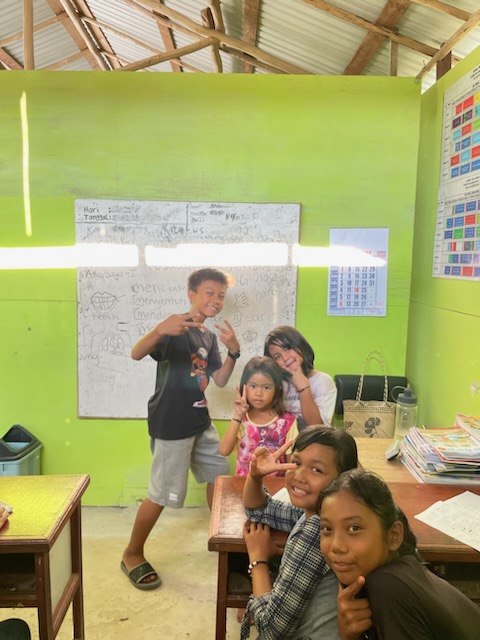
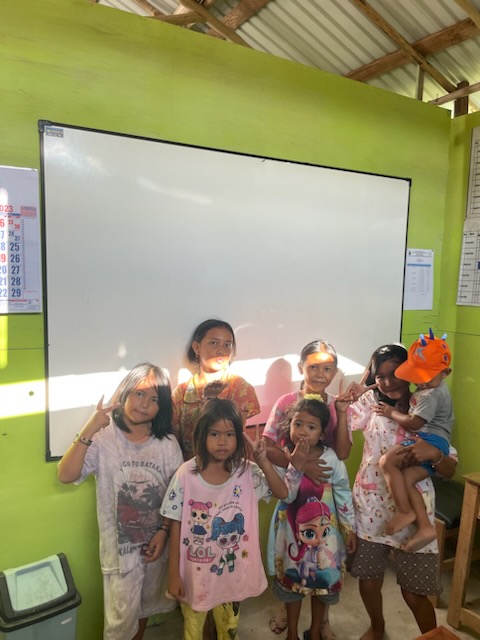
Whiteboards before vs after
After expressing this to Tuanans director, Dr. Erin Vogel, she encouraged me to apply for a CORE Borneo grant. I submitted a proposal with five requests: workbooks, recreational supplies, supplies for a ‘create your own book’ project, whiteboards, and a library. The proposal was approved for my entire budget!
Each child received a tote with multiple notebooks, pencils, a sketchbook, colored pencils, erasers and more. We installed three new whiteboards in the school. I purchased over 100 books to create a library ranging from novels, comics, and educational books, along with totes for storage. Recreational supplies such as a soccer ball, art supplies, and badminton rackets were given to the school. I made workbooks that revolutionized the way the children interacted with the course material. And lastly, each child created their own book written in both Indonesian and English, and illustrated with a variety of artistic mediums that allowed them to express their creativity.
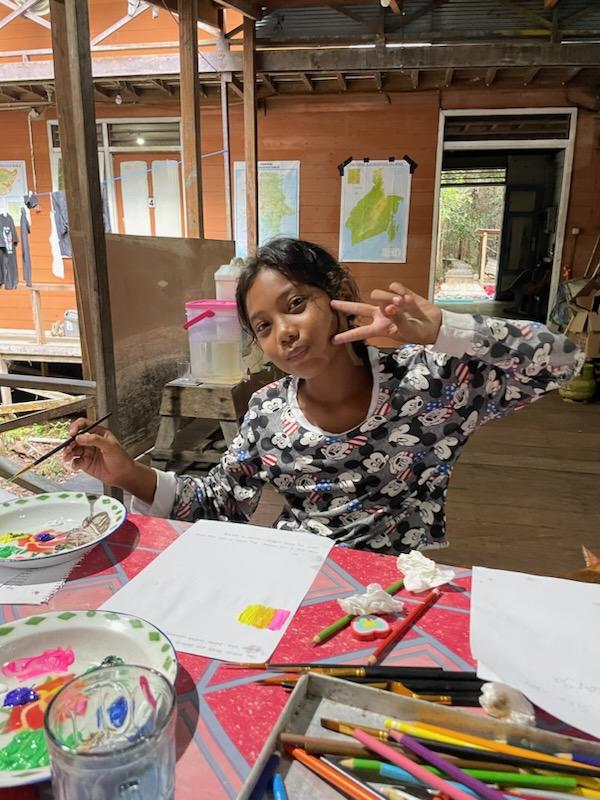
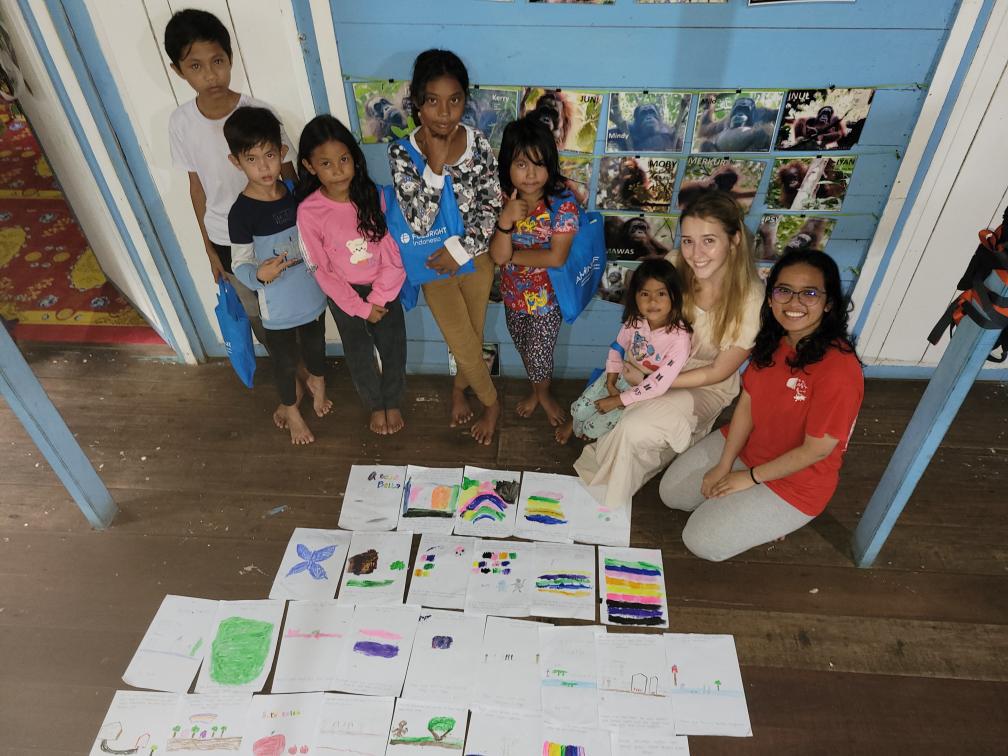
Many of the kids told me that this was their first time painting.
The week after the kids received their sketchbooks they all came to school with tons of drawings to show me. Then, after the kids received their workbooks they all came to school remembering the material of the previous week, excited to tell me that they had studied. They often asked if they could work ahead in their free time. They progressed more in the following month than they had in the previous 5 months.
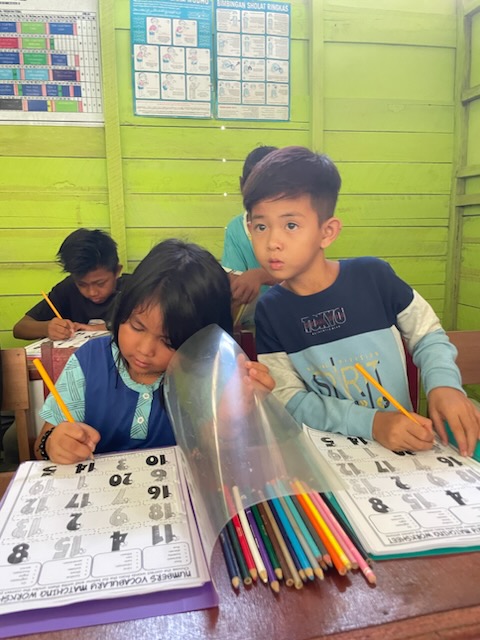
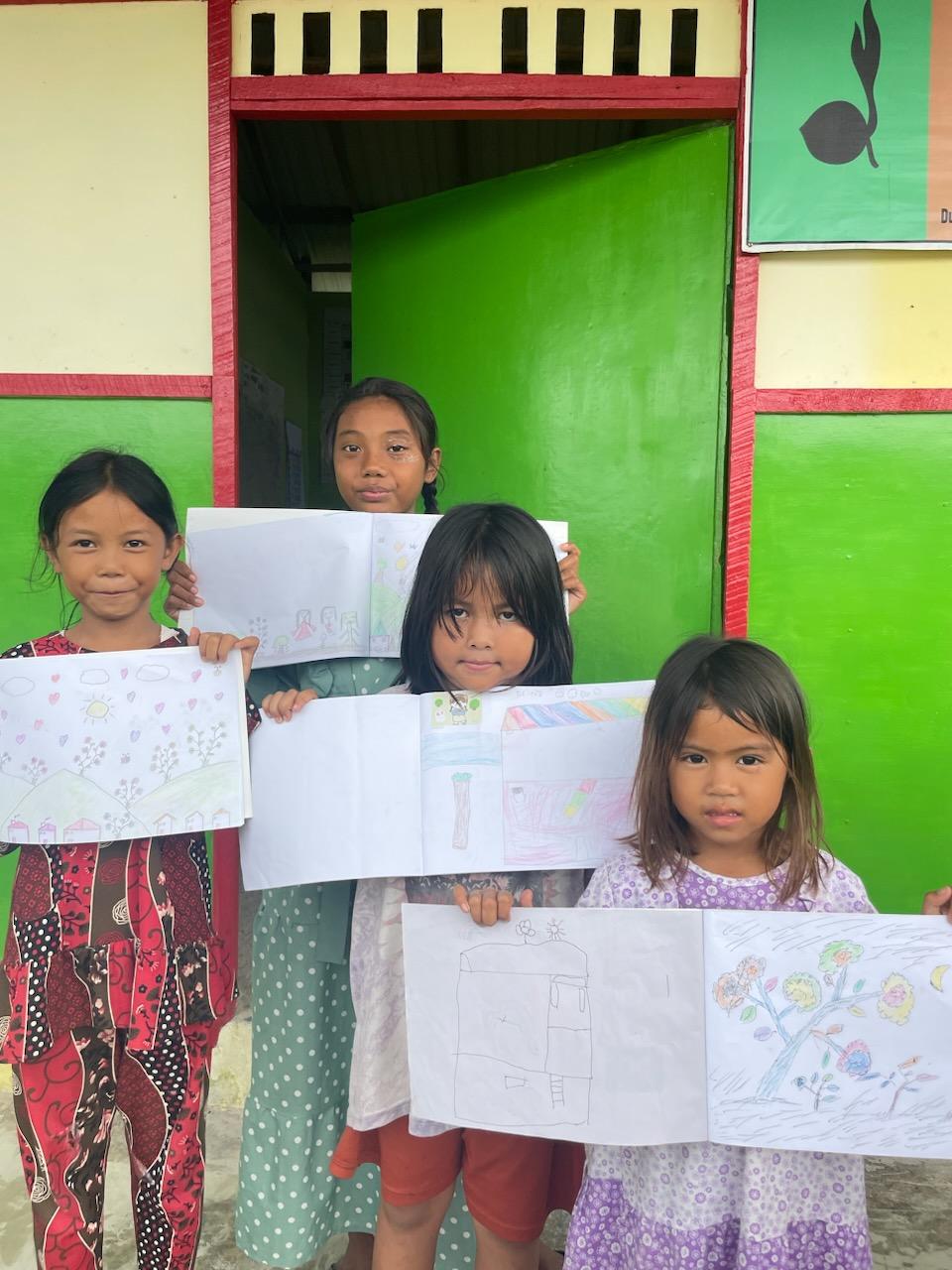
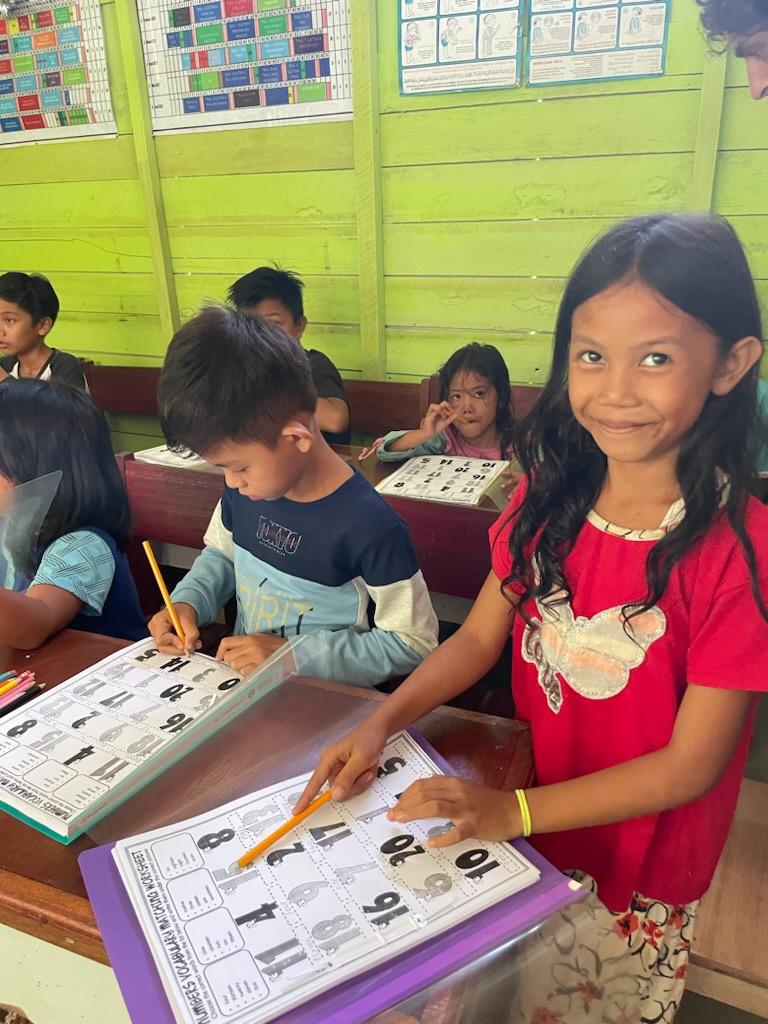
This did not go unnoticed by the adults of the village. Many parents thanked me and some asked if I would start an adult class. This project continued to strengthen the bond between Tuanan Orangutan Research Station and its local community.
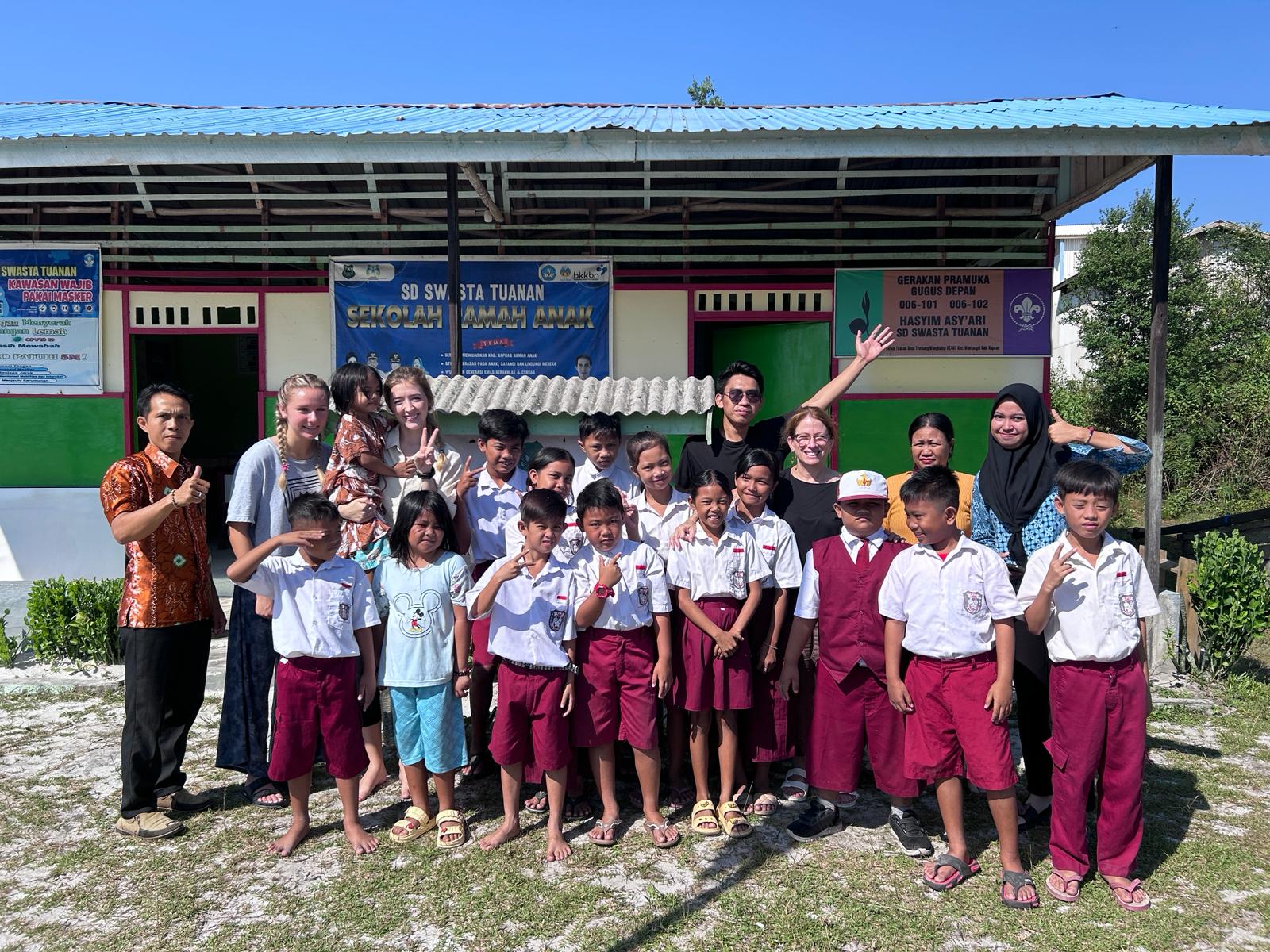
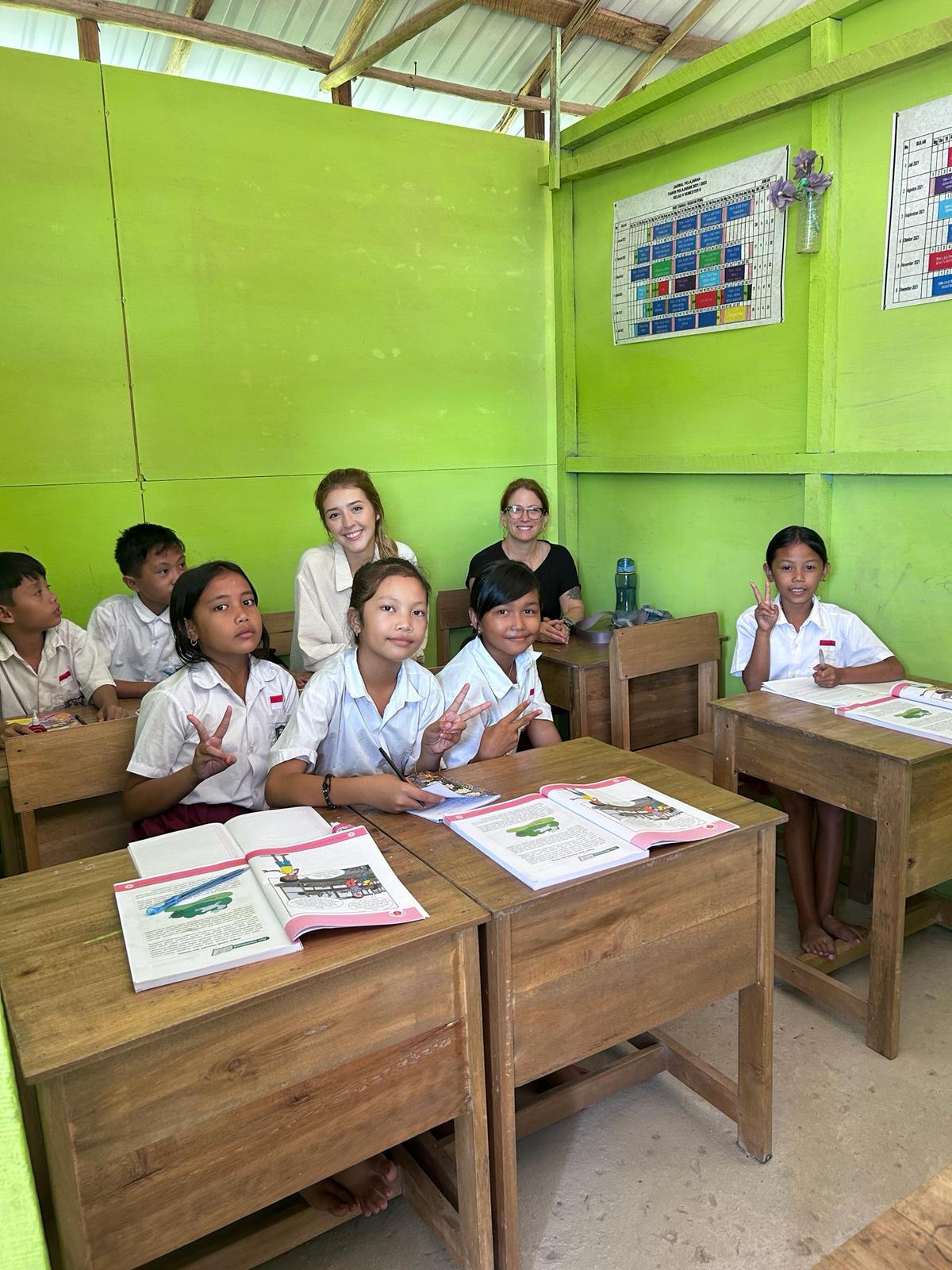
I am extremely thankful for CORE Borneo’s support, as well as that of Dr. Erin Vogel and PhD candidate, Will Aguado. Most of all, I am grateful for the community that welcomed me into their homes and allowed me to teach their children. The year I spent at Tuanan gave me more than I could ever give back and the children of Pasir Putih hold a big piece of my heart.

