History
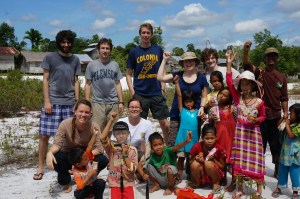
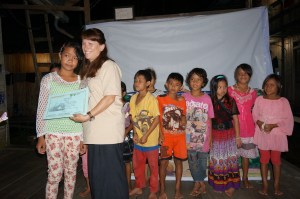
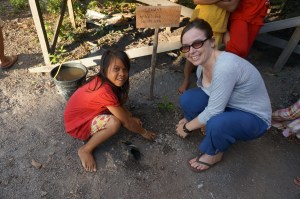
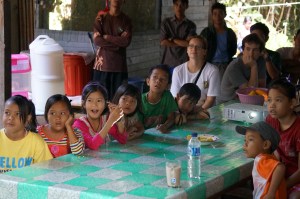
In 2009, the Conservation Strategies and Action Plan for Indonesian Orangutans emphasized the empowerment of local communities via education and involvement as the most effective way of promoting orangutan and forest conservation. Rutgers and UNAS began implementing these recommendations in 2011, when the management partners, led by Dr. Vogel and Dr. Utami-Atmoko, at TORP implemented an environmental education program in elementary schools in the TORP vicinity. This program was established to build awareness of local conservation issues through education and to provide local communities with the foundation to sustainably manage their natural resources over the long term. Thus, since 2011, UNAS and Rutgers have worked together with local school officials (Education Department of Kapuas) and teachers to introduce this program in two nearby elementary schools. At the beginning of 2015, CORE Borneo was established and began to provide funding to UNAS and Rutgers allowit them to expand this program to five additional communities, and engage the adults in these communities as conservation partners through environmental education. This program has been embraced by the local community, and the students have benefited from improved education in the classroom, as well as participation in forest field trips, a reforestation project, community cleanups, and special puppet shows about orangutan conservation presented by the children to the entire community.
Current and Ongoing Initiatives
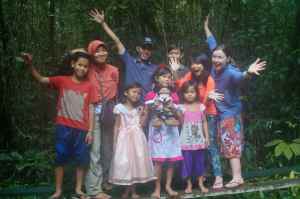
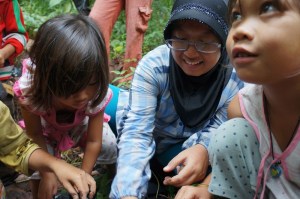
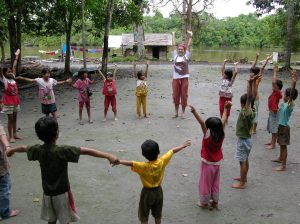
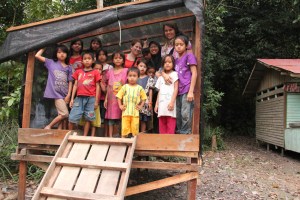
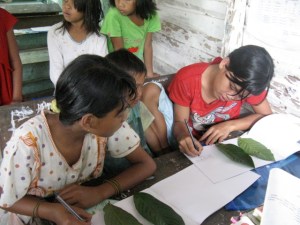
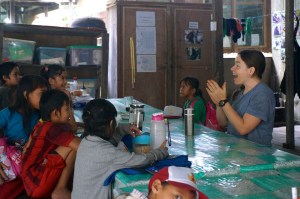
Since 2011, TORS and the Universities (UNAS and Rutgers) have been offering a dynamic environmental education program in local elementary schools to build awareness of conservation issues. This program has contributed to both the general education (e.g., reading and writing) of the local children, as well as their knowledge about and appreciation for the forests surrounding their communities. With CORE Borneo funding, they have implemented a 12-module curriculum that employs hands-on experimental learning. They teach lessons focused on climate change, peatland ecology and function, the water cycle, waste disposal, deforestation, plant biology, reforestation, and biodiversity conservation. The program leaders and teachers continuously update and develop new materials and lesson plans. Many researchers from TORS regularly engage in education program activities at the research station and in schools.
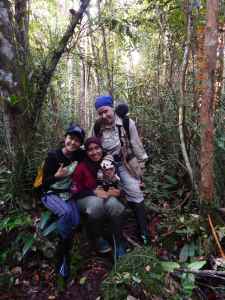
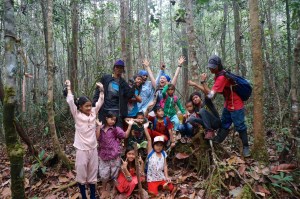
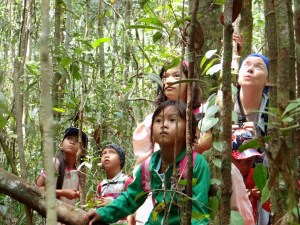
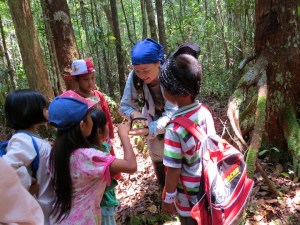
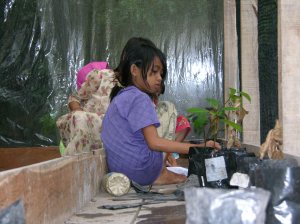
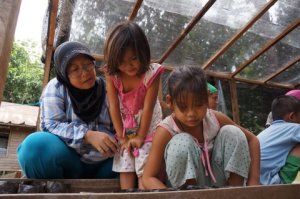
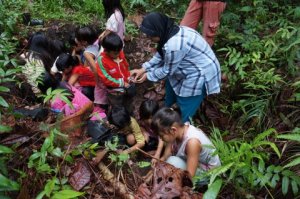
In addition to classroom instruction in three schools, CORE Borneo funded a number of hands-on activities in the communities and forest. In 2013, researchers and local assistants from TORS created a humorous and educational short film demonstrating the proper disposal of various kinds of trash. This program included a brief lecture and short games and activities for the children, followed by a community cleanup in the village. CORE continues to fund Tuanan researchers to continue to develop additional activities and educational materials about the importance of good waste management. Children also participate in reforestation around the villages, with efforts focused on those species that are most commonly used by the orangutans at TORS, as well as species that provide food for the local community. By engaging local communities via education, this program aims to increase awareness of the threats to orangutans and other biodiversity in the Mawas Reserve peatlands and support for their conservation. In 2014, The Universities developed a “forest school” for which they invited small groups of students and teachers to TORS for first-hand experience in forest ecology and orangutan behavior. For most, this is the first time they have experienced the forest in this way, and for nearly all, the first time they have encountered and observed wild orangutans.
Environmental Education Teachers
- Past
- Bryan Eichen (2025-present)
- Justin Philbois (2024-2025)
- Hannah Ogden (2023-2024)
- Rebecca Brittain (2015, 2016, 2018, 2019, 2020)
- Fidini Choirunisa (2015)
- Ratna Imoetz (2014-2015)
- Sofi Rohmat (2011-2013)
- Zoe Maxon (2011-2012)
- Astri Zulfa (2010-2012)


You must be logged in to post a comment.