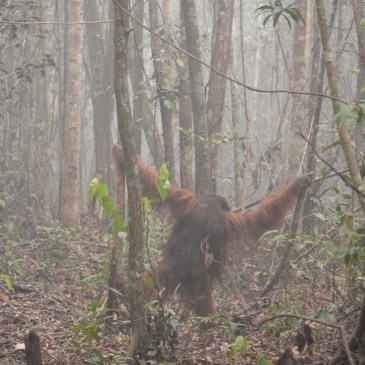
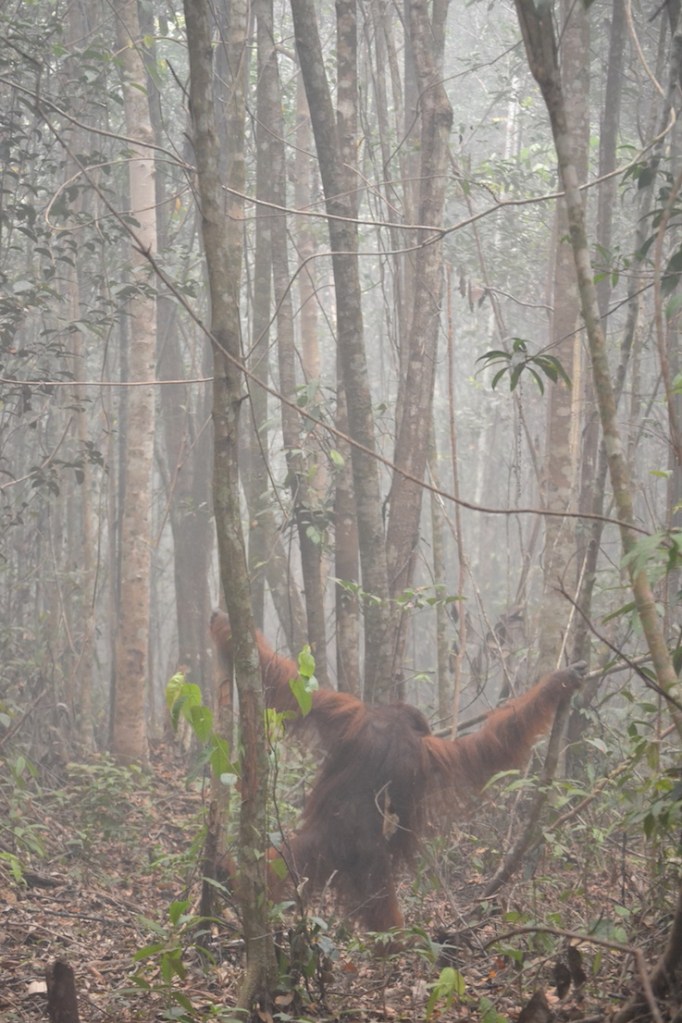
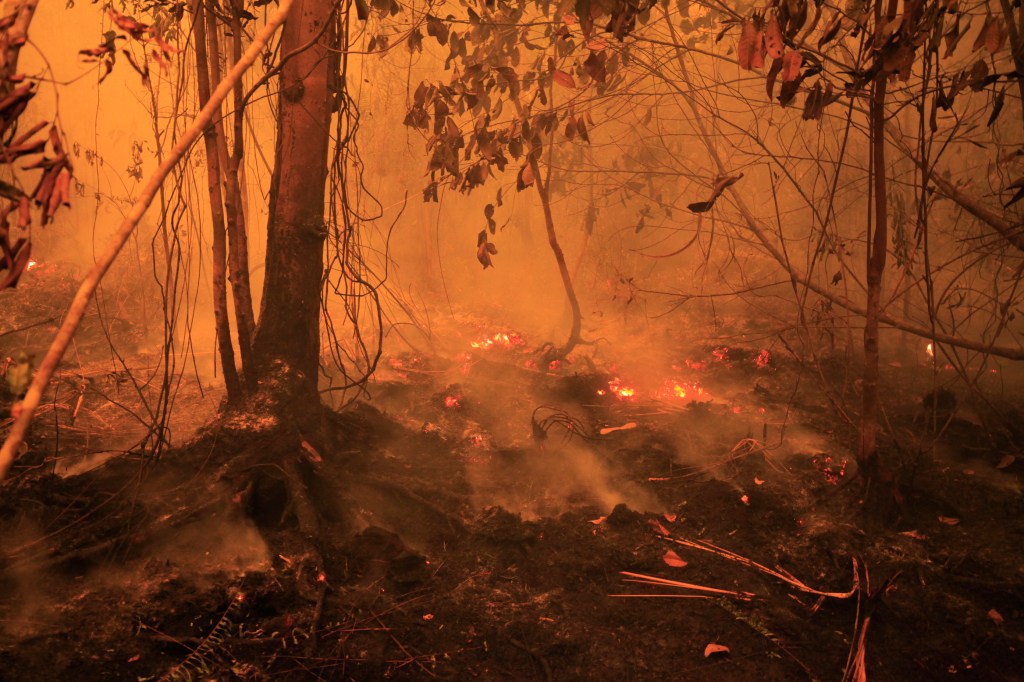
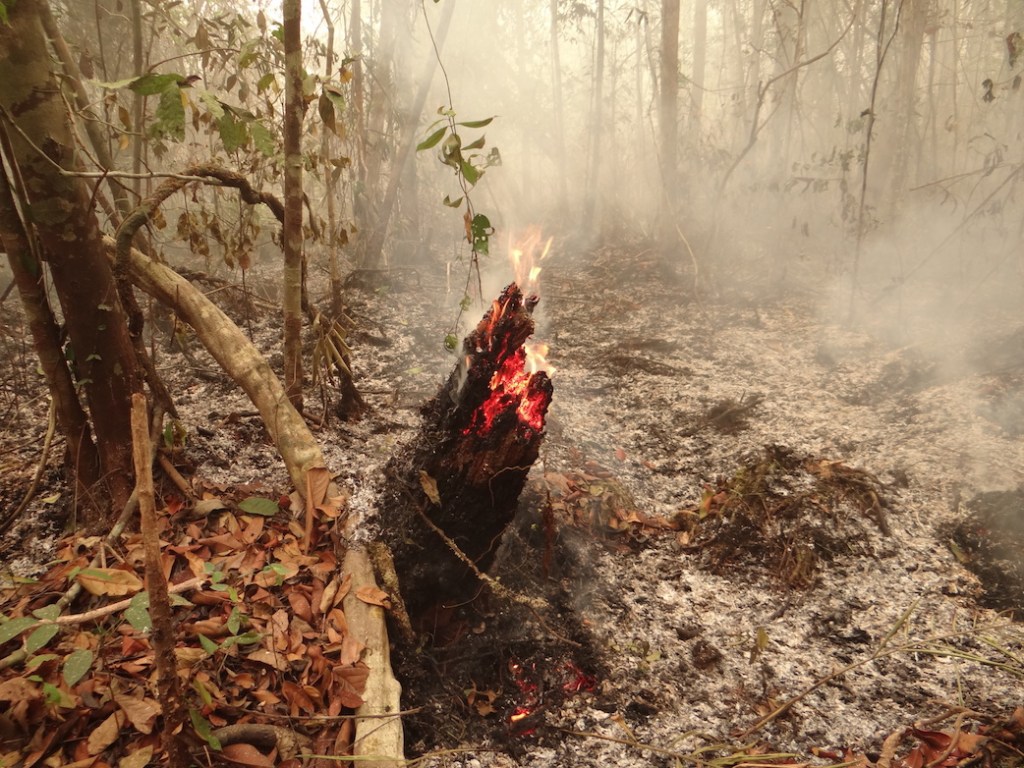
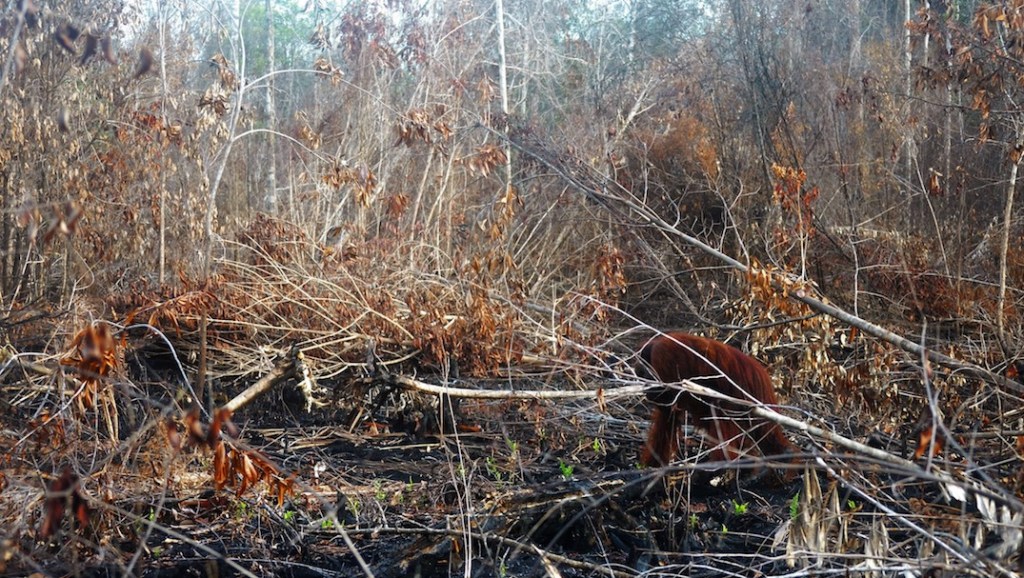
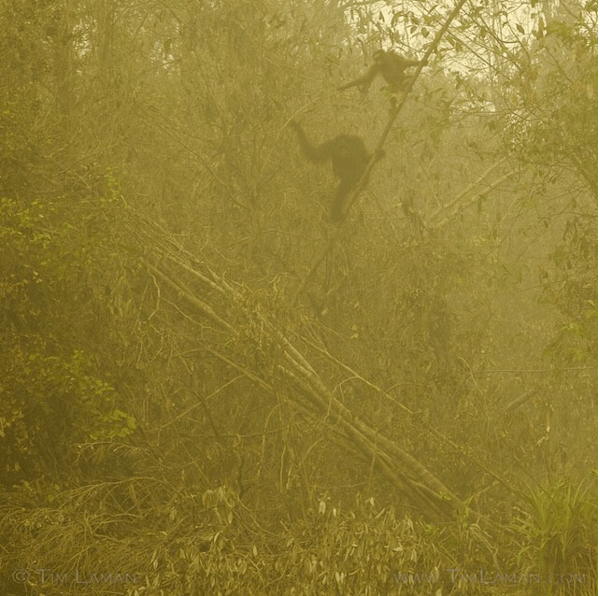
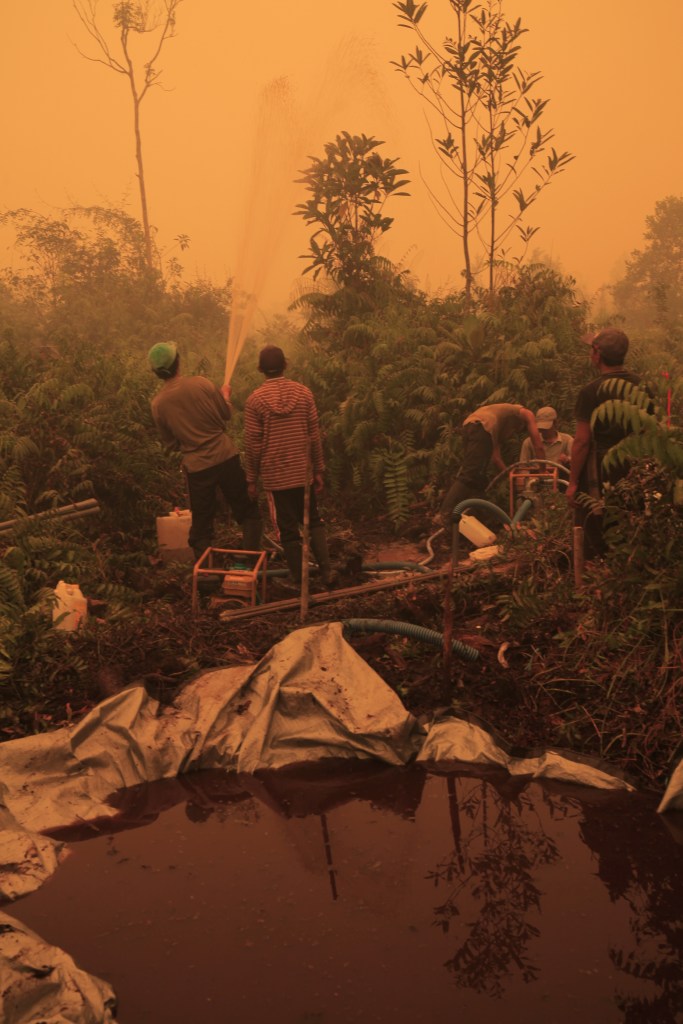
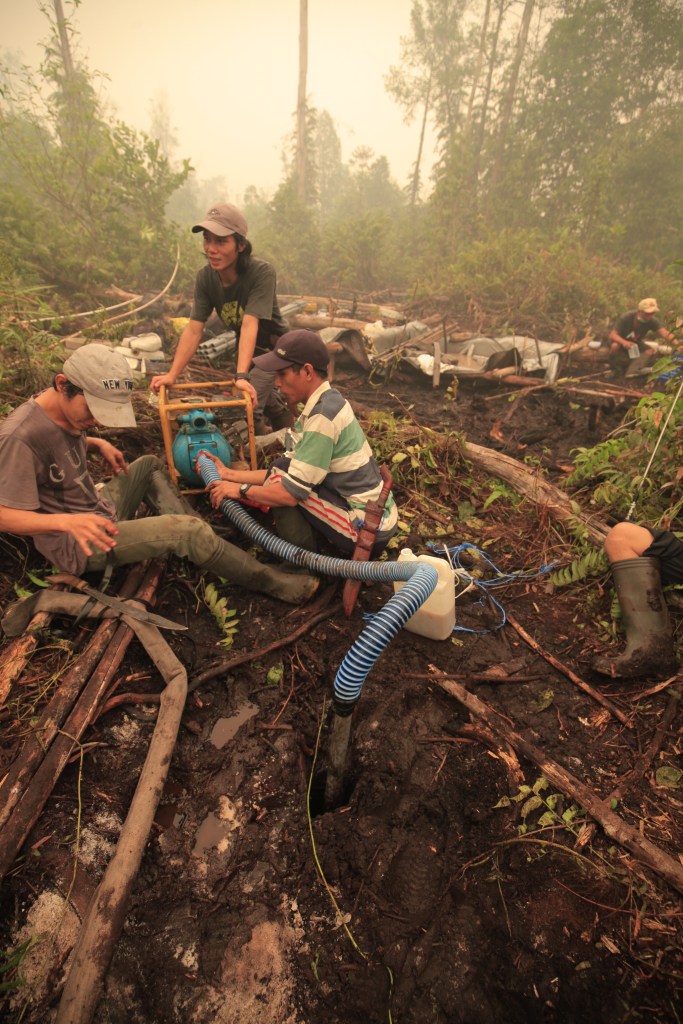
In 2015, Indonesia experienced some of the worst forest fires it’s had in more than a decade, burning an estimated 2.1 million hectares of land, much of it in Central Kalimantan. During the 2015 fires, roughly 10% of the research area at TORS was destroyed and the research camp nearly burned down. In this emergency situation, TORS researchers, students, and local staff found themselves on the front lines of firefighting efforts that threatened the research area and camp. In order to protect the forest, our team drilled deep (about 50 feet) into the peat, to access a water source to extinguish the peat fires. Thanks to a very successful crowd-sourced fundraising campaign, we were able to purchase firefighting equipment, and hire a specialized local team who will maintain these hydrants and patrol the forest for fires throughout the dry season.
Because most fires were set by local people to claim or clear agricultural land, much of the impact of fires could be avoided if appropriate land-use policies were in place and enforced. Without sustainable alternative livelihoods and effective education, the peatland forests in the Mawas Reserve continue to be vulnerable, particularly as climate change increases the frequency and intensity of strong El Niño events that promote massive forest fires. Thus, it is increasingly critical that we engage local communities to increase awareness of and support for forest management and conservation throughout the region.


You must be logged in to post a comment.