It’s February 4th and the 52nd Superbowl is currently being battled out between the New England Patriots and the Philadelphia Eagles. Earlier today, I went to the grocery store to prepare for this annual American event and found it swarming with people all on a similar mission. Moving through the produce section, one particular area proved impenetrable; the (practically empty) chicken shelves were mobbed with customers jostling and grabbing for the remaining packages of breasts, thighs, and, of course, wings. For most Americans, the watching of football is almost synonymous with the eating of chicken wings; one of the most nationally omnipresent sports bar chains — Buffalo Wild Wings — is named for just that!
Americans eat A LOT of chicken. In 2014, the poultry industry analyzed global chicken meat consumption trends.
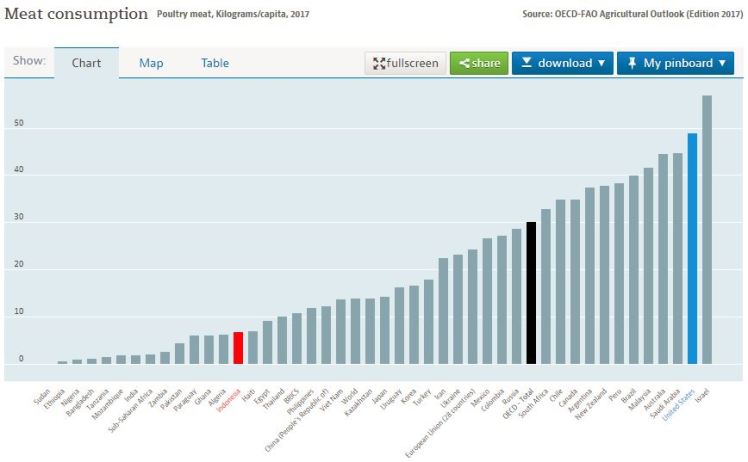
For the 12 consecutive years represented in this graph, American chicken consumption consistently averaged high above that of people in almost every other area of the world (not to mention significantly above the world average). It’s also clear that consumption steadily increased over that period: from 31.5kg per capita in 2000 to 38.6 kg per capita in 2011. That trend has continued, topping off at 48 kg of poultry consumed per capita in 2017. Beef/veal was the next highest consumed meat at a comparatively meager 25.8 kg/capita.
Indonesia World Average United States
Similar to the US, poultry is by far the largest source of meat protein consumed in Indonesia. Yet, at 6.8 kg/capita, Indonesians consumed 7 times less chicken than Americans in 2017.
So, in honor of this all-American, wing-fueled Superbowl day, I’m writing about chicken and its special role in the lives of all at Tuanan.
When people ask about my experiences at Tuanan, they are often interested less in the nuances of orangutan dietary ecology (the fundamental focus of our research) and more in our own nutritional habits…
Almost invariably I am asked: “What did you eat in the forest?”
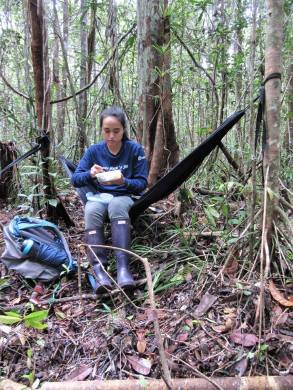
Cecilia breaks for lunch during a follow
The quick answer to that is a lot of rice. As is true in many other countries, rice is a dietary staple which forms the starchy basis for many meals. Its low cost, simple preparation and high volume yield (not to mention its filling carbohydrate properties), also make it a convenient commodity for any field researcher. Huge amounts of rice can be made at dinner, stored overnight, eaten for breakfast the next day, packed into Tupperware to take into the forest for lunch, and then re-cooked to make a second dinner of fried rice.
Of course, one cannot subsist on rice alone unless one is of Malagasy descent (people in Madagascar eat more rice per capita than those in any other nation in the world). Indeed, having previously survived on rice and beans during my fieldwork in Madagascar, the variety and quality of the food at Tuanan far exceeded my expectations.
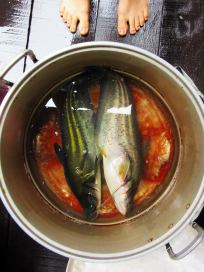
Nonetheless, Tuanan isn’t for those who balk at the prospect of vegetarianism; there is almost no meat available. But not to worry — protein-deficiency was not high on our list of concerns. In lieu of meat, every meal includes one, some, or all of the following: tofu, tempeh, eggs, peanuts, fresh fish or canned sardines. Camp also keeps a steady supply of the commonly available vegetables — carrots, cucumbers, cabbage — to supplement these staples. Beyond these, I’d guess that the largest component of a Tuanan diet is the vegetable oil in which everything is fried.
The only thing better than fresh fish for dinner is fresh chicken!!!
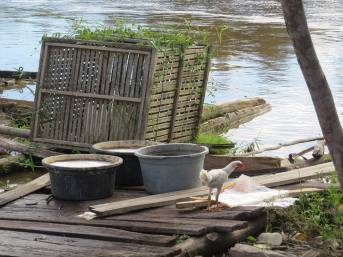
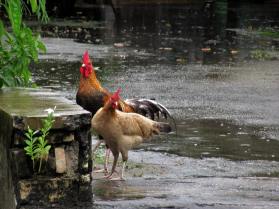
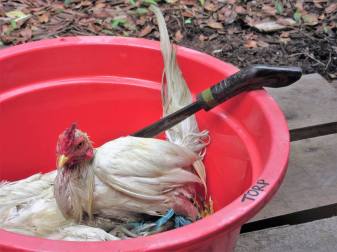
Chicken is the one meat protein available to those at Tuanan. Unlike most of the other food items bought for camp — which come weekly on a supply boat up the river — chickens are bred in the Tuanan village and are often bought from individual households.
Compared to orangutans, for instance, chickens reproduce rather quickly. Sadly, not quickly enough for everyone who wants chicken to have chicken all the time. Given this biological check on supply, and considering its singularity as the only non-fish meat source, the price of chicken at Tuanan is high. The camp budget allows for the meat to be brought only about once a month and on special occasions such as holidays or important visitors. Hence, you can probably imagine everyone’s excitement on evenings when the smell of chicken would waft from the kitchen. That smell was a harbinger of good things. As follow groups would return one by one from the forest, there’d be a particular sense of happy anticipation that engulfed camp. The assistants who would normally return to their families in the village for dinner would stay to enjoy the rare meaty meal together.
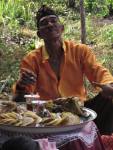
A special village ceremony features chicken-laden offerings
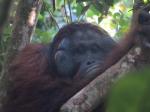
Gismo wishing he wasn’t frugivorous
Spreading the word that there’ll be chicken for dinner!
Sometimes, chicken would be bought well in advance of an event or special dinner. When this happened, the chicken had to be kept alive until the night it was to be eaten (no refrigeration). A researcher currently at Tuanan related a particularly harrowing tale about one such instance which not only underscores the challenges of keeping a chicken alive and contained, but also highlights the rich biodiversity surrounding the Tuanan Orangutan Research Station…
You don’t say!
A 5-kilogram chicken was bought on a Friday and brought back to camp. There, it was put in an old rice bag and tied to one of the wooden posts which supported the roof of the mandi (bathing) area. Everyone passing through camp that evening had time to happily note and anticipate the bird! Unfortunately, whoever had tied that rice-bagged chicken to the post, had failed to properly secure the string. That night, the chicken broke free and, hampered by the darkness, made it only a few meters from its bag to roost near the front of the camp building.
Tragic!
All in camp were awoken that night by the piercing squawk of their treasured poultry. Rushing towards the sound, they were devastated to discover a wild boar midway through eating their chicken (I don’t have a picture of Tuanan’s wild pigs but it should suffice to say that the first time I stumbled across one at night, I was sure I had come upon an undiscovered species of equatorial grizzly bear).
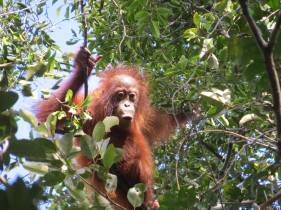
Give me sugar!
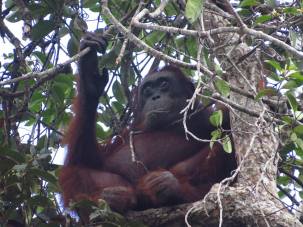
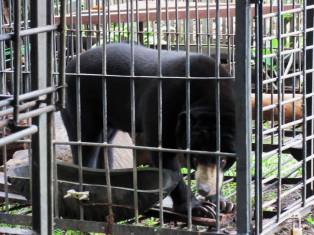
The next morning, disappointment permeated the air and actions of all as they prepared for their day. Suddenly, tell-tale kisssqueaking signaled an orangutan close by. Rushing towards the sound, everyone was stunned to find not an orangutan, but a sun bear (the bear species which actually lives at Tuanan), nose deep in camp’s only supply of sugar — a resource almost as coveted as chicken. The kisssqueaks were coming from a disgruntled unflanged male orangutan watching the scene dubiously from a tree a few meters away.
One of our assistants, Awan, once asked me: “how often do you eat chicken in America?” I laughed but was rather taken aback by the question… “Anytime we want,” I replied on behalf of all Americans. I thought about grocery stores: cellophane-wrapped packages of chicken breasts, thighs, legs, wings; boneless, skinless, low-fat, organic, free-range; one pound, two pounds, five pounds. We could have chicken for weeks on end without a second thought. Awan was equally taken aback by my answer. I tried to explain how common the meat was for us… a concept I could not convey. Even less could I begin to explain how chickens in America were so different from the small, sinewy birds in Indonesia.
Hearing the ‘Chicken-Pig-Bear-Sugar-Orangutan’ saga after months of re-adjusting to life in the US, I found it mostly comical. For those at Tuanan, however, I’m sure it held notes of tragedy. For many Indonesians (and others around the world) chicken is a big deal! This is a condition that many Americans will never have to empathize with. For that, and for the other plentiful, accessible resources available to us here, we should remember to be grateful.
 It’s February 4th and the 52nd Superbowl is currently being battled out between the New England Patriots and the Philadelphia Eagles. Earlier today, I went to the grocery store to prepare for this annual American event and found it swarming with people all on a similar mission. Moving through the produce section, one particular area proved impenetrable; the (practically empty) chicken shelves were mobbed with customers jostling and grabbing for the remaining packages of breasts, thighs, and, of course, wings. For most Americans, the watching of football is almost synonymous with the eating of chicken wings; one of the most nationally omnipresent sports bar chains — Buffalo Wild Wings — is named for just that!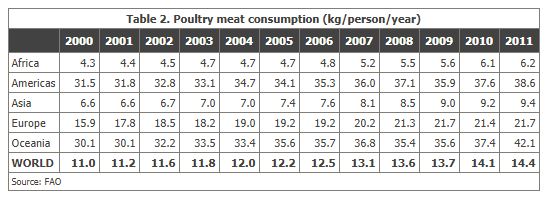
 Nonetheless, Tuanan isn’t for those who balk at the prospect of vegetarianism; there is almost no meat available. But not to worry — protein-deficiency was not high on our list of concerns. In lieu of meat, every meal includes one, some, or all of the following: tofu, tempeh, eggs, peanuts, fresh fish or canned sardines. Camp also keeps a steady supply of the commonly available vegetables — carrots, cucumbers, cabbage — to supplement these staples. Beyond these, I’d guess that the largest component of a Tuanan diet is the vegetable oil in which everything is fried.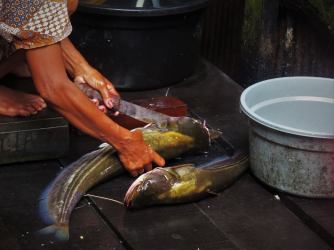
 Chicken is the one meat protein available to those at Tuanan. Unlike most of the other food items bought for camp — which come weekly on a supply boat up the river — chickens are bred in the Tuanan village and are often bought from individual households.