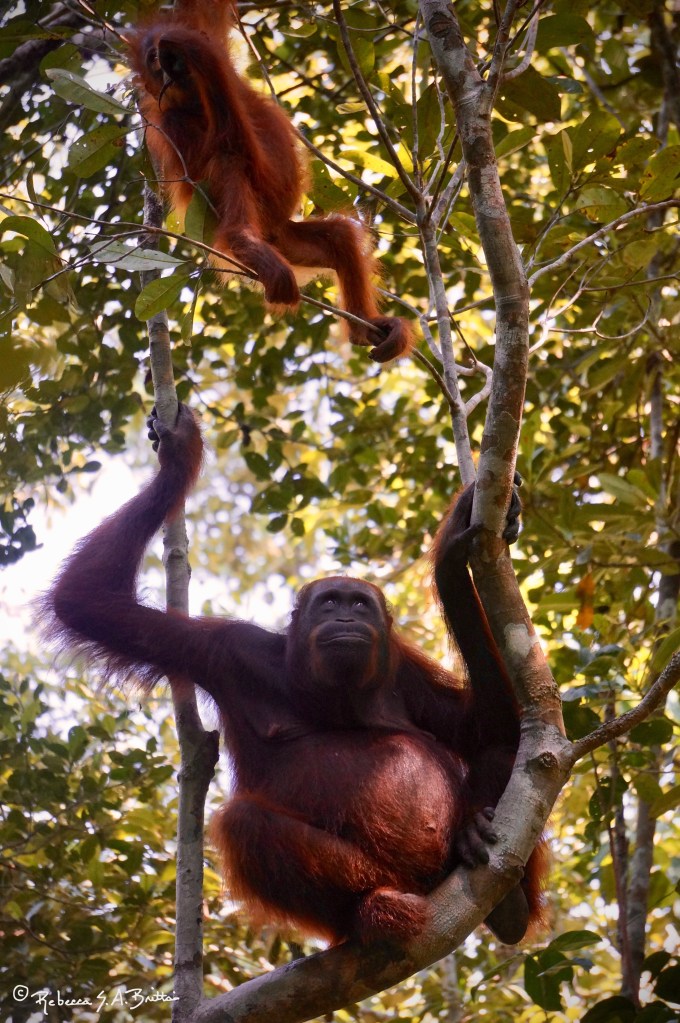
Meet Milo! Milo is one of our staff’s favorite orangutans at the Tuanan Orangutan Research Station! Named after a popular Indonesian chocolate powder drink, Milo is a fully habituated wild orangutan, which makes her easy to follow and allows us to record her dietary intake, movement, and social interactions with great accuracy. She was first found at Tuanan in 2003 with an estimated age of only 18 months, which means she is probably 17 or 18 years old now. This also means Milo has spent most of her life with researchers and staff periodically observing her, which is likely why her behavior is relatively unaffected by researcher presence. An example of this is illustrated in the video below, where Milo and her son Merkur take turns drinking water from a treehole, unbothered by the researchers recording them.
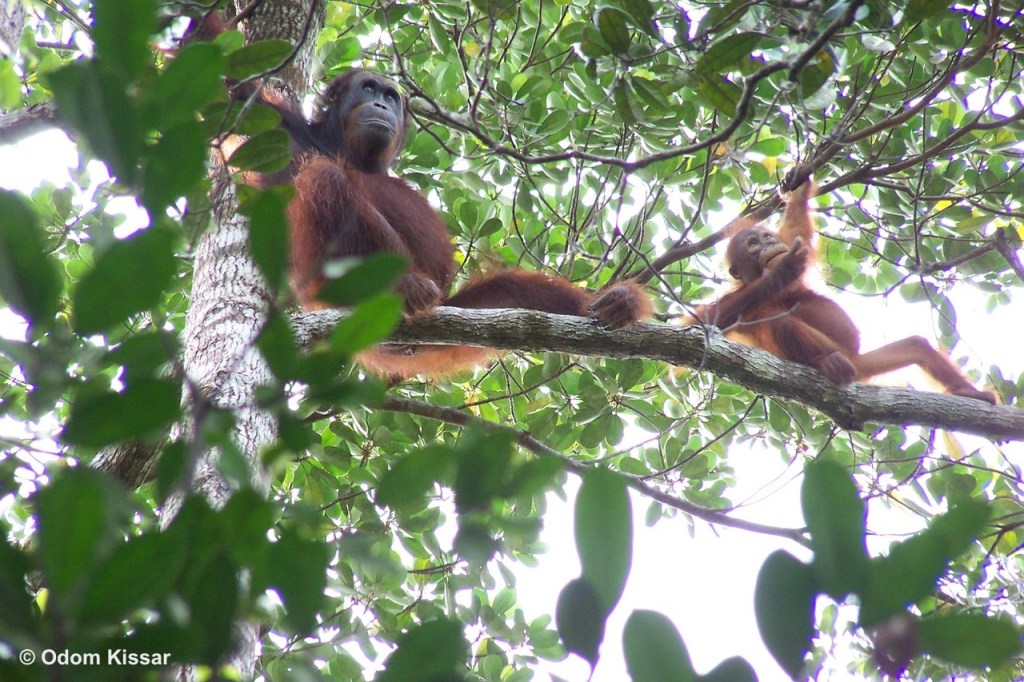
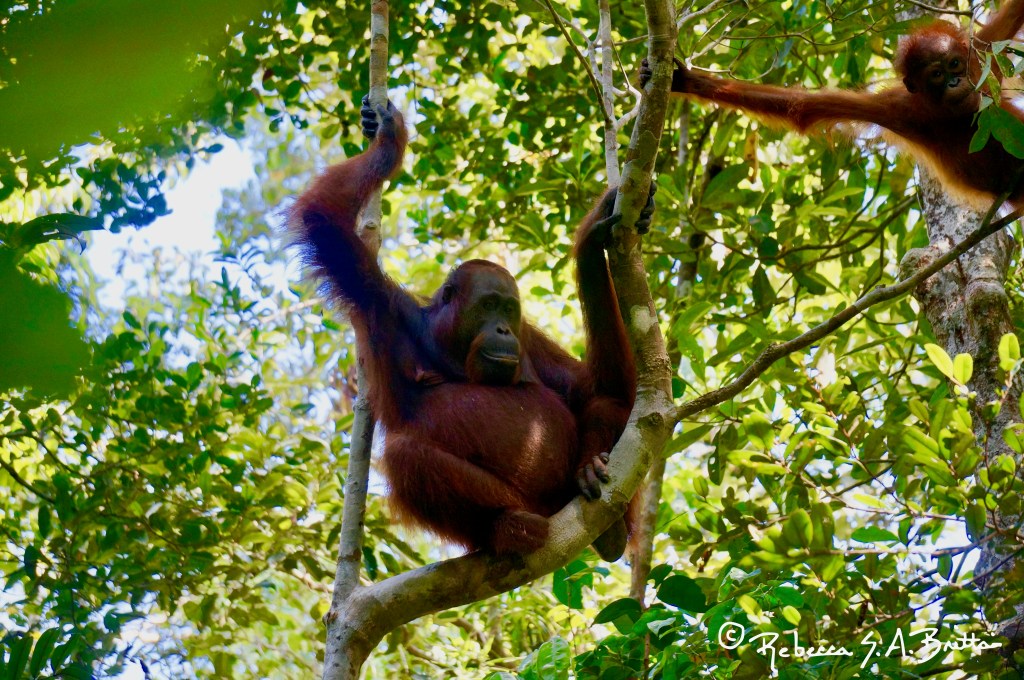
Milo is part of the largest known matriline at Tuanan. Milo’s mother Mindy, and grandmother Jinak, are also frequently spotted residents of the Tuanan study area. Milo’s first and only offspring, her son Merkur, was born 4 years ago. This means Milo’s grandmother Jinak is also a great-grandmother! Milo also has a younger sister, named Mawas, who is transitioning from semi-dependent to independent. Mawas is seen from time-to-time with family, and at other times Mawas travels alone, most likely to begin establishing her own home range.
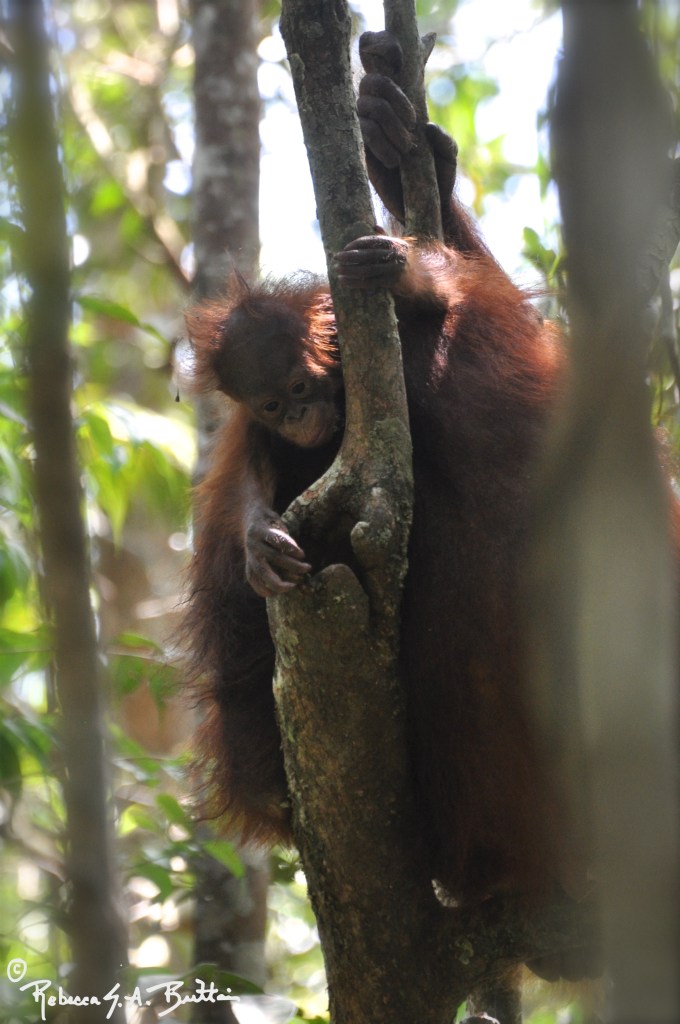
Fun Fact: Orangutans feed on many different plant species as well as insects, and to a lesser extent on vertebrates and animal products as well. As a result, infant and juvenile orangutans have a lot to learn from their mothers! They need to know which foods and food parts are safe to eat, how to process these food items or extract specific parts, and when these food items are safe to eat. Orangutans at Tuanan eat a lot of unripe and half-ripe fruits, in addition to ripe fruits; they also eat leaves, flowers, bark, pith, insects, drink water, and albeit rarely, they have been observed eating honey and even a slow loris on one occasion. Below is a photo of Milo’s son Merkur, when he was only 5 months old, peering into a treehole after he watched his mother drink water from it.
One interesting fact about Milo is that she is frequently seen eating termites! Insects are generally a good source of protein for the orangutans at Tuanan. In the video below, you can see and hear her sucking the termites out of a piece of dead wood.
Milo’s story epitomizes the importance of long-term research on wild orangutan populations. Since its doors opened in 2003 and Milo was just 1.5 years old, the Tuanan Orangutan Research Station has collected over 16 years of useful data from her—from her social behavior, her foraging decisions throughout a changing environment, her ranging and activity patterns, to the birth of her son; these long-term data will help us better understand many unanswered questions about orangutan behavior, ecology, life history, and much more. To help protect Milo, Merkur, and the forests they live in, please consider donating.
Check back with us for periodic updates about Milo and Merkur!

