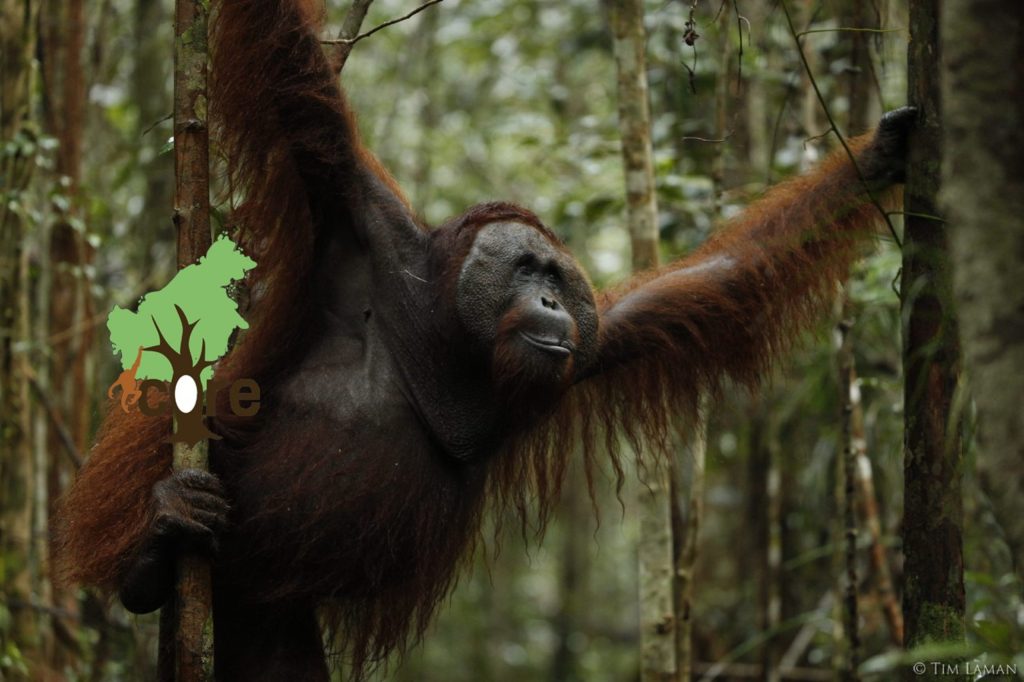
During this global COVID outbreak, our Tuanan team remains safe and the spread of the virus has not reached our local villages. To protect the orangutans in the Tuanan research area, we have stopped conducting full-day follows of the orangutans, as recent studies have shown that great apes, including orangutans, are vulnerable to the disease (Janiak et al, 2020).
We are remaining research active at the station. We are continuing to monitor biodiversity with our camera trap project. We continue to capture images of monkeys, sun bears, clouded leopards, and a variety of really amazing raptors and birds. This is one way we can continue research and monitor the health of the forest post the 2019 fires. Our amazing team of field assistants along with dedicated UNAS students have been conducting our annual orangutan nest survey as well. This is a research activity that the team can do without coming into contact with orangutans. The team walks randomly selected transects throughout the study area and counts the number of orangutan nests observed, records the decomposition state of the nests, and marks the nest with a GPS waypoint. This way we can come back to the same trails each year and determine if the nest counts change.
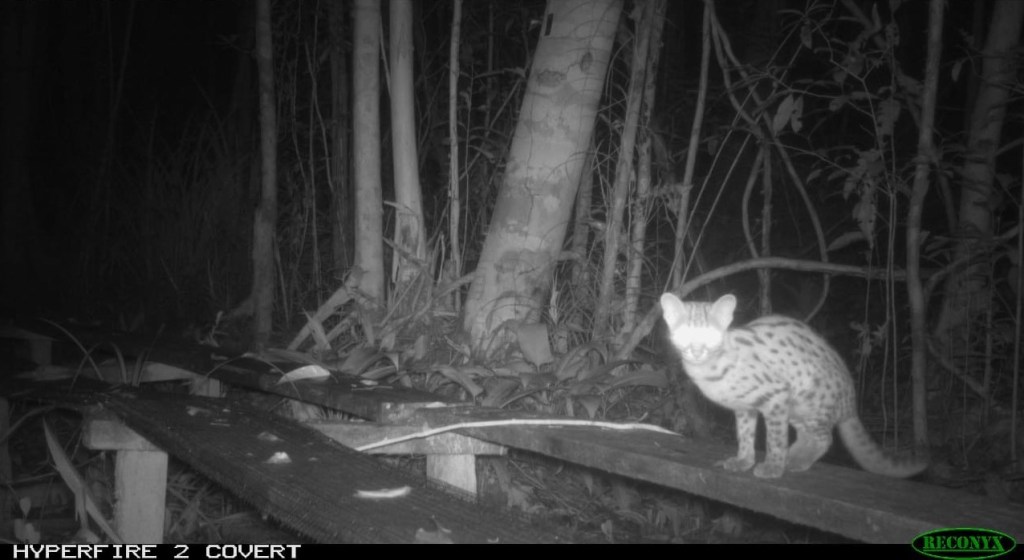
Sunda leopard cat (Prionailurus javanensis) 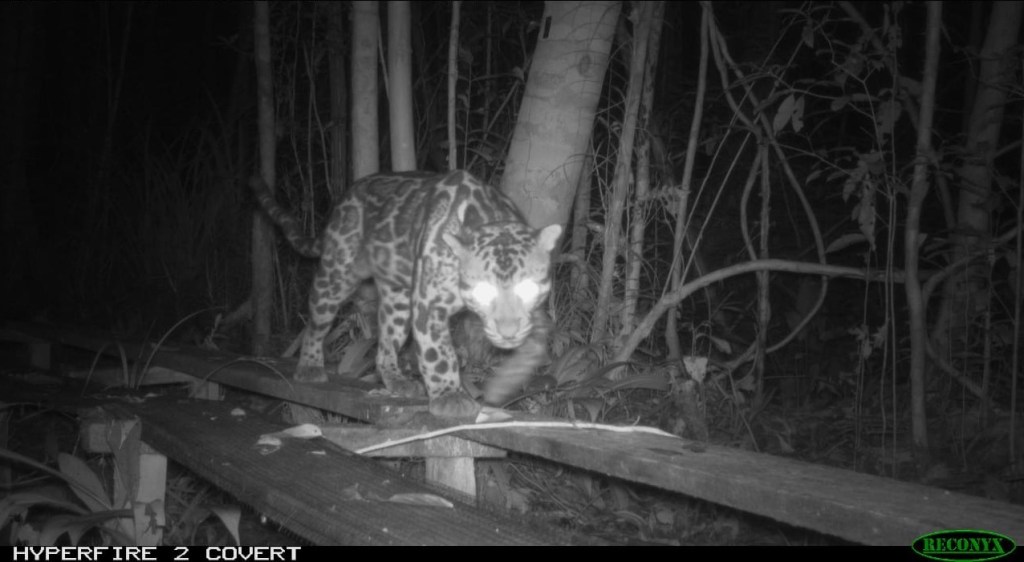
Sunda clouded leopard (Neofelis diardi) 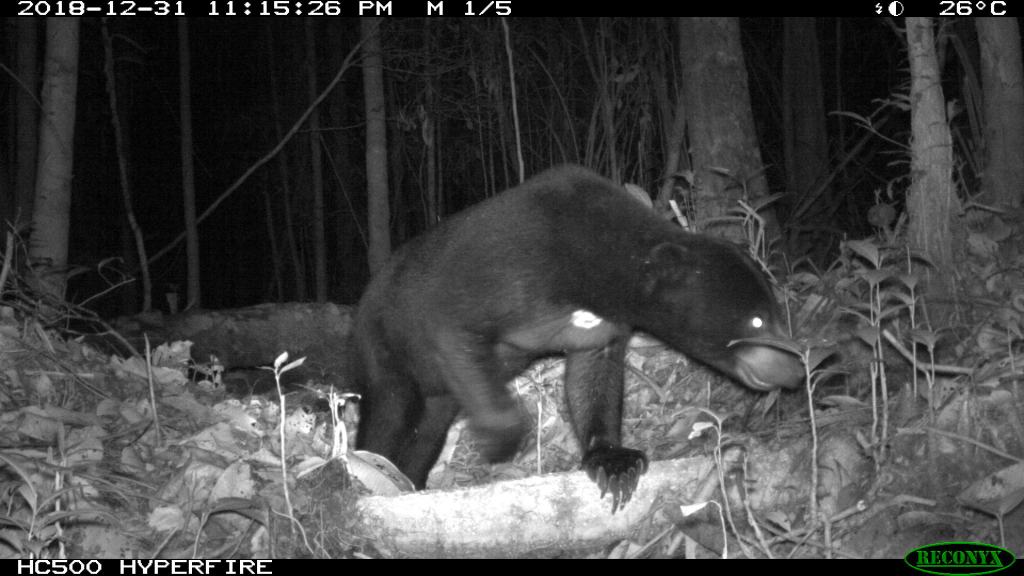
Bornean sun bear (H. m. euryspilus) 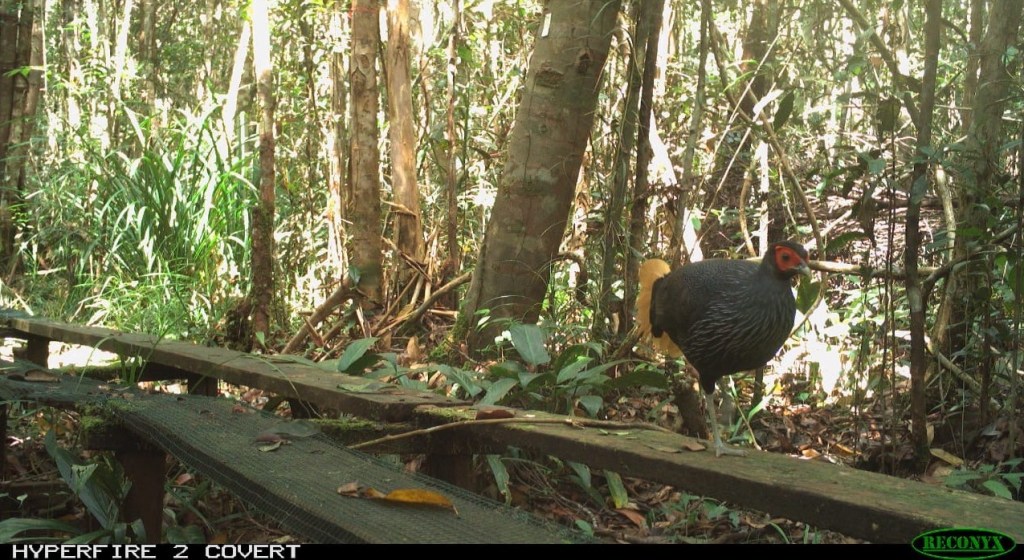
Crestless Fireback (Lophura erythrophthalma) 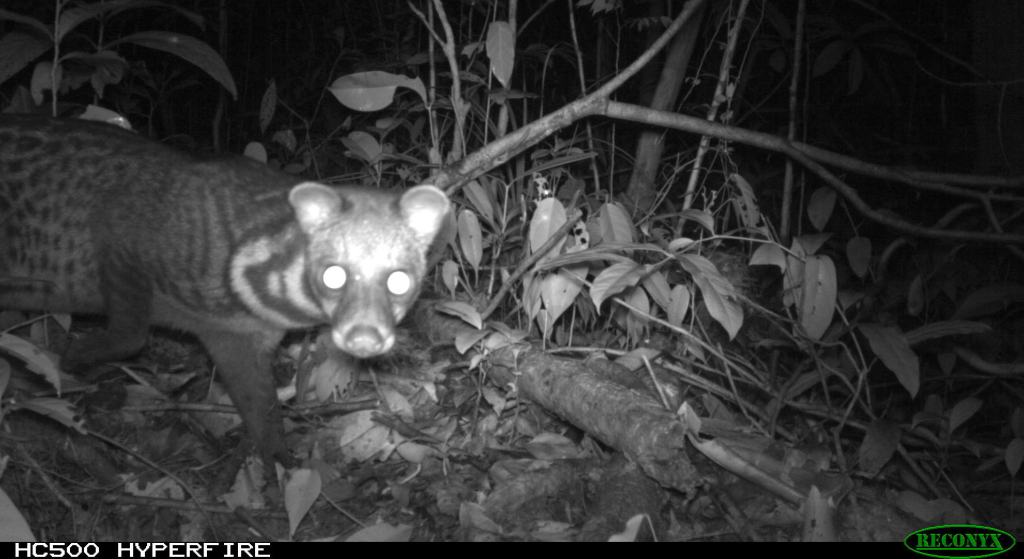
Malayan civet (Viverra tangalunga) 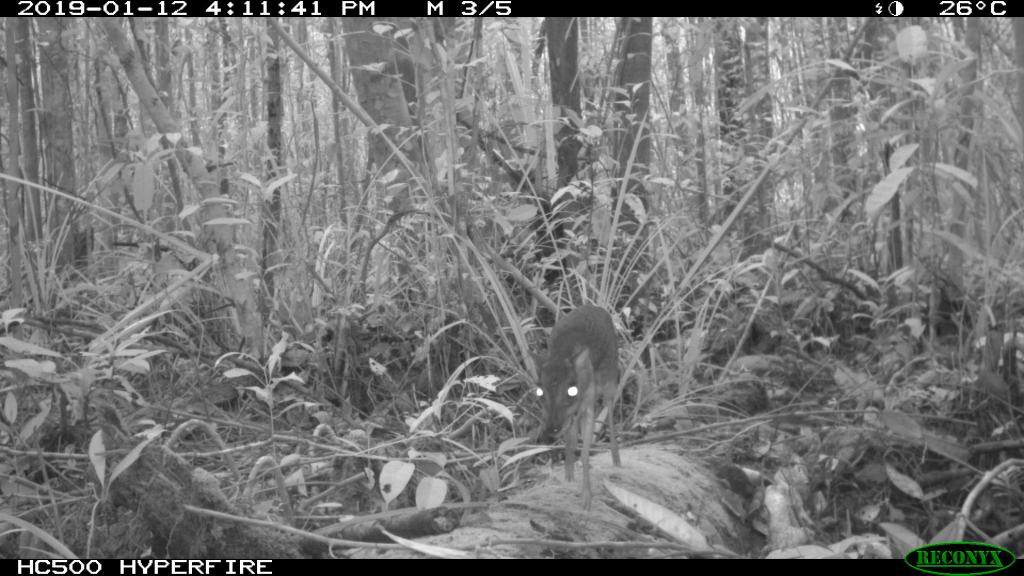
The Lesser Mouse-deer (Tragulus javanicus) 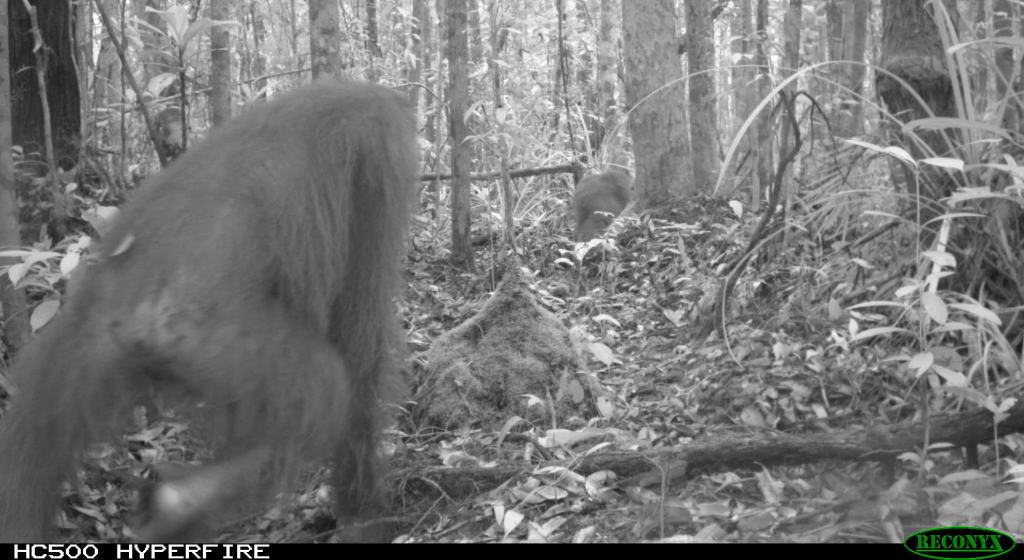
Two adult orangutans in a “party” traveling on the ground
In addition to our forest activities, we are busy rebuilding our boardwalk into the forest with sustainably and legally logged materials. We hope within the next few months to have easier access to the forest for our team. We are grateful to all of your generous donations and Rutgers University for helping us maintain our trail and boardwalk system in the forest.
Most importantly, our Tuanan research team has been working closely with the Pak Suriato, the village head of Mangkutup, to help provide personal protective equipment (PPE) to the region of Mangketup, including the villages closest to our station. CORE Borneo and the Tuanan team joined with Pak Suriato and his committee to purchase and distribute PPE to all households in the Mangkutup area. Each house kit included a bucket with a spigot so people would wash hands before entering their homes, rubber gloves, masks for the whole family, hand sanitizer, and hand soaps. We also helped distribute important information packets (digitally and printed) to the surrounding villages about COVID, safety measures, symptoms, and how to prevent its spread. So far we are fortunately that we are isolated enough that we do not have cases in our local villages. We are also so grateful to our staff and team for staying in camp and continuing to monitor the orangutans and the forest on a daily basis.
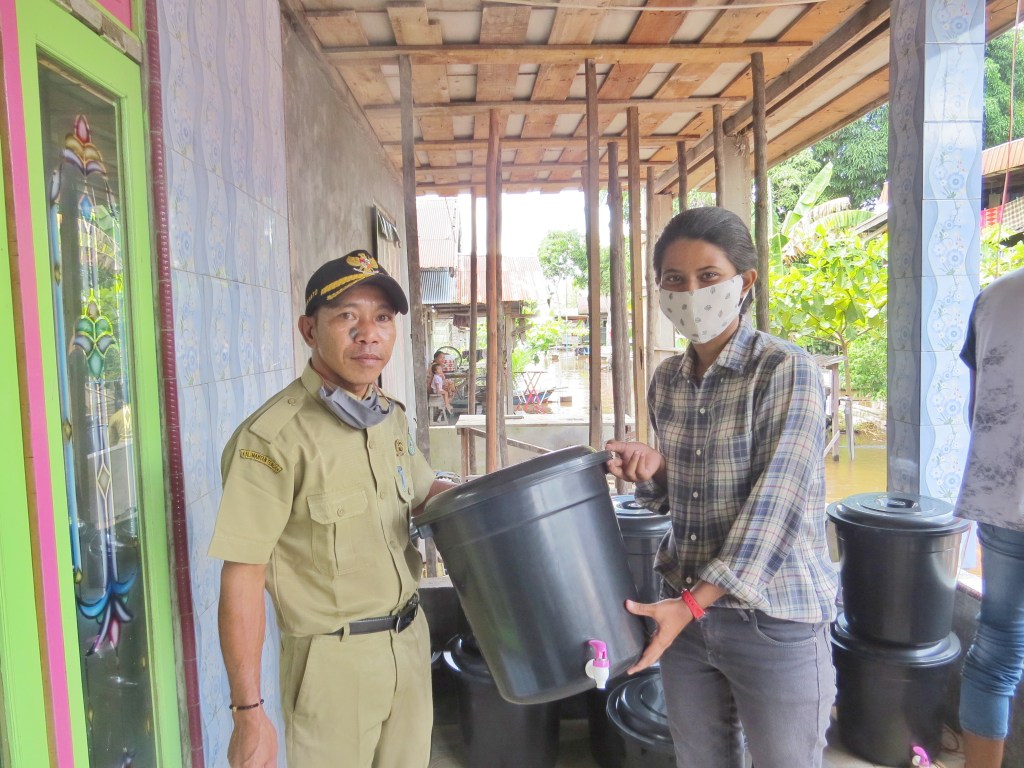
Pak Suriato with Tuanan manager Prima Lady 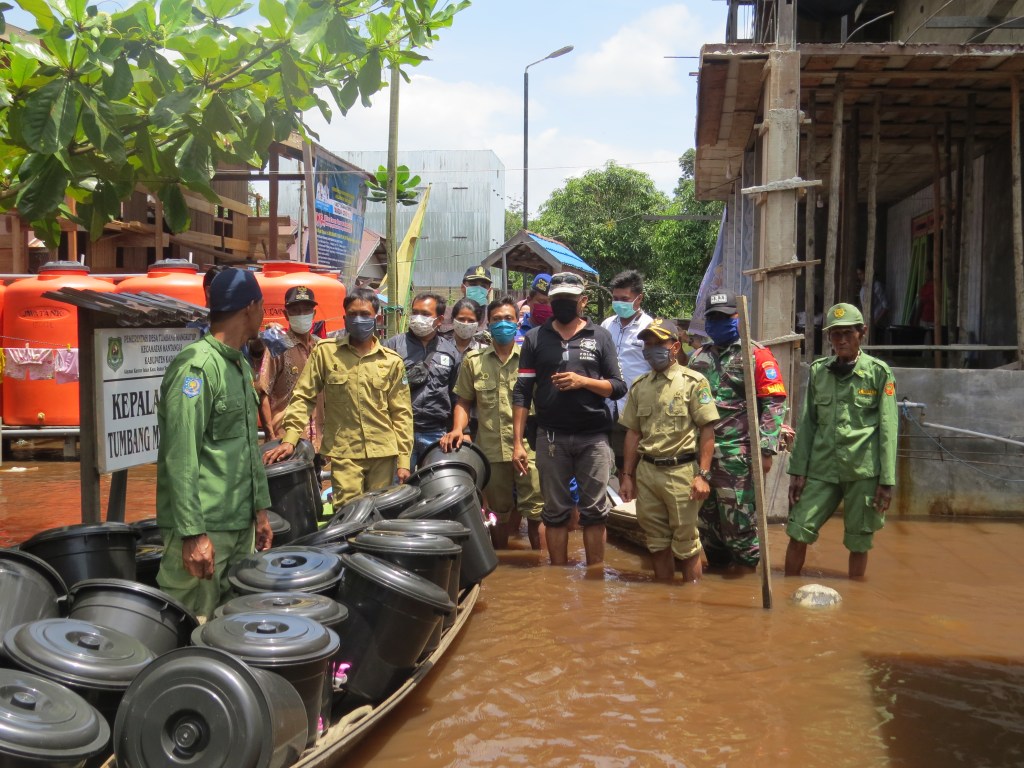
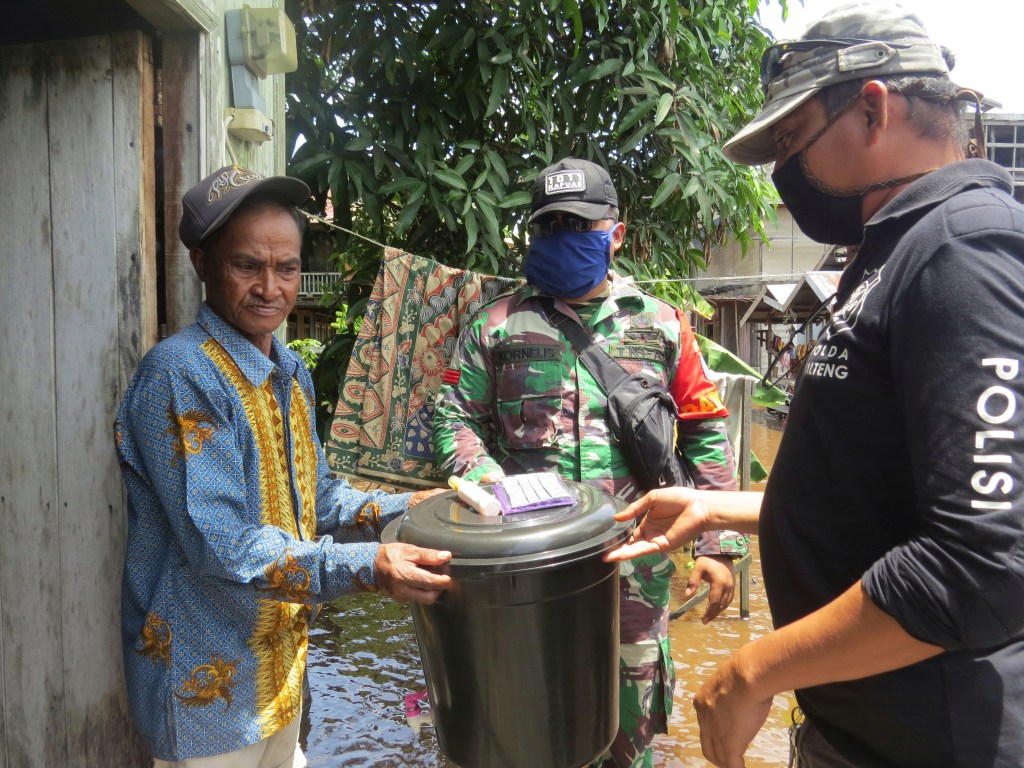
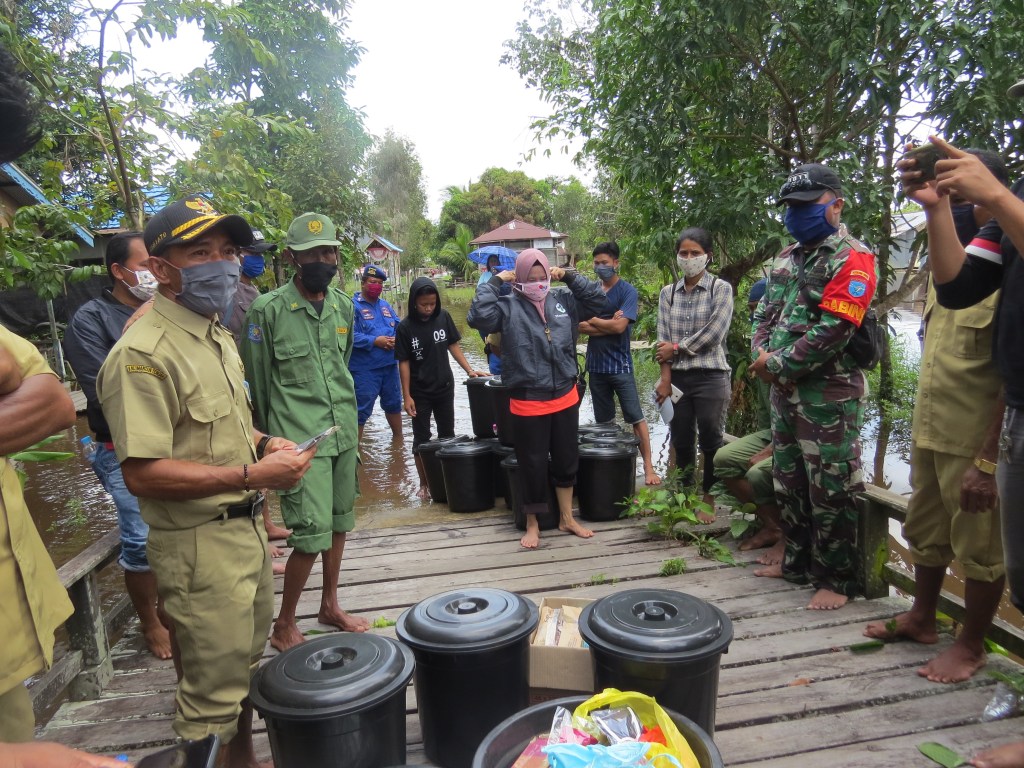
Pak Suriato distributing the COVID kits
We were fortunate to see one of our females we who have not seen in a long time, Streisel! And she now has a baby. We found her once in January 2019 and she was very pregnant (insert picture) and then again just in April 2020 during a nest survey. We think she likely gave birth in April or May 2019, as this infant looks old enough to be between 9 months and 1 year old. Unfortunately, we did not see her often enough as she is not as habituated as some of the other orangutans that we regularly follow. What we do know if that this is Streisel’s first offspring. We will post a new Blog about Streisel and her incredible story!
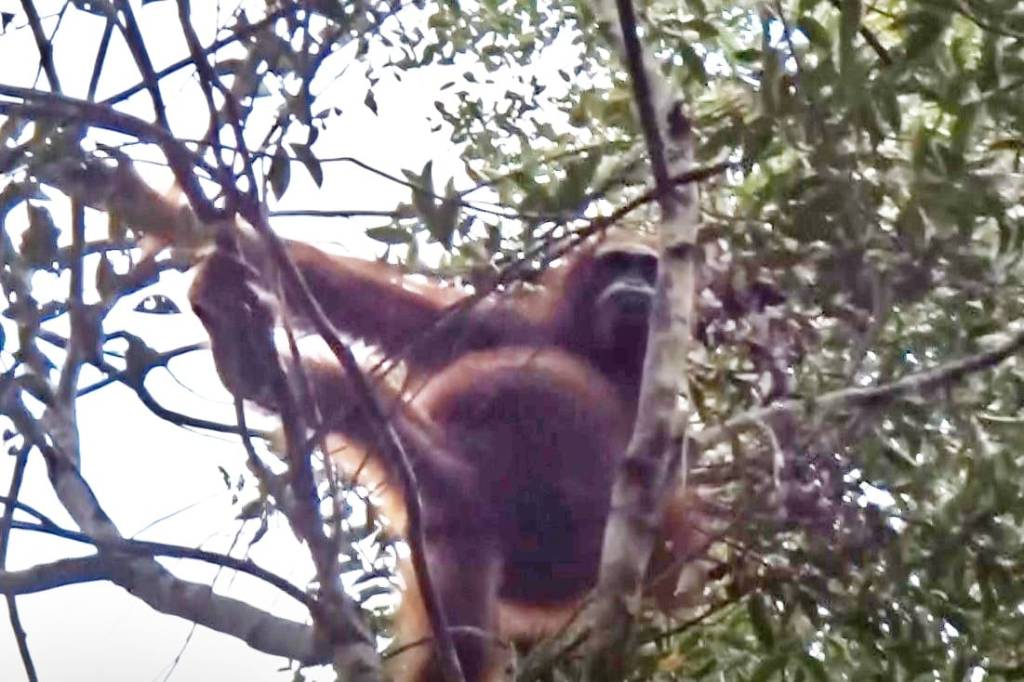
Streisel pregnant in January 2019 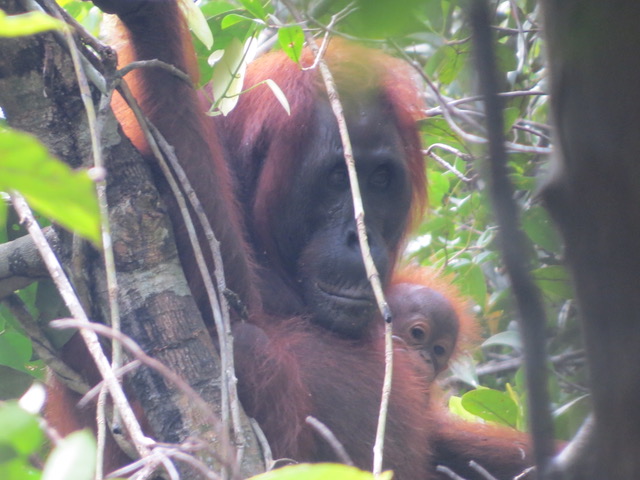
Streisel in April 2020 with infant

