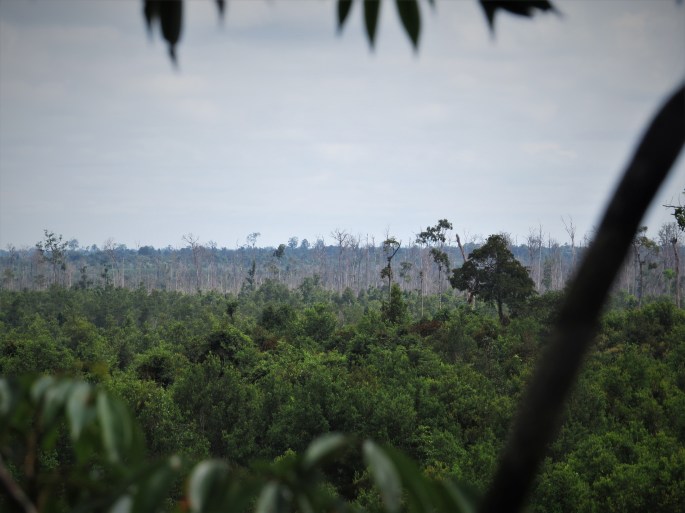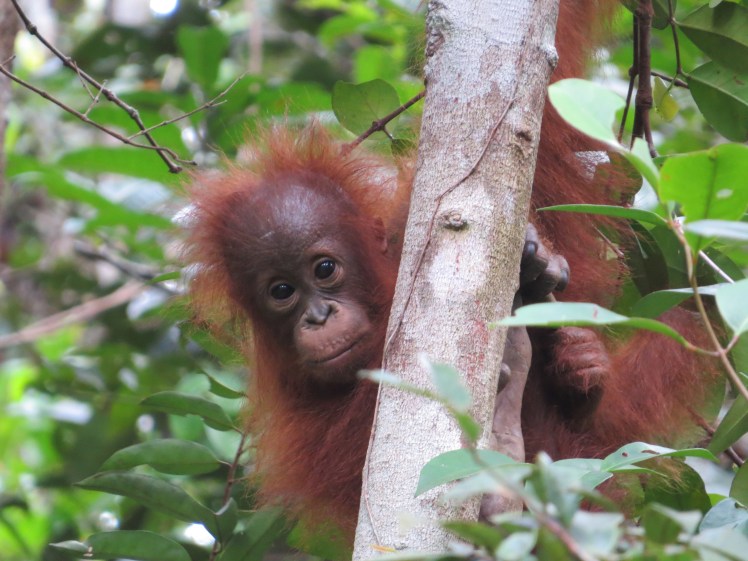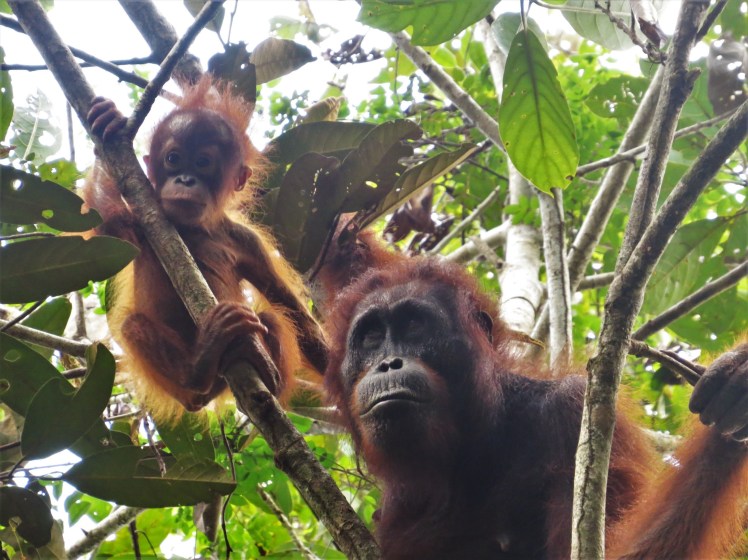
“Today I woke up at 2:50 am. I made some black tea, packed a small tupperware lunchbox as full as I could of last night’s rice, fried tofu, a hard-boiled egg and sautéed greens. I had filled my backpack up the night before with everything I would need to take into the forest: a hammock, camera, GPS, map of the forest, compass, behavioral data-sheets, binoculars, rain-poncho, a first aid kit, and water…”
I wrote these words a year ago today, hunched over my computer on the floor of my room at Tuanan.
I typed hastily, rushing to return my computer to its tub of silica gel which served as a shield against the 90% humidity that hung sluggishly around me. Also, I was exhausted.
My day had begun at 2:50 that morning. I’d been awake for 17 hours already and so my brain struggled to remember all the things that had comprised the lead weight I’d been carrying on my back all day.
However, no matter how tired and overwhelmed I felt, I was determined to give as accurate an account of the day’s events as possible. It had been my first day entering the Tuanan forest and my first time following wild orangutans.
8 months and 135 pages later, my final journal paragraphs speak nothing about early mornings, rice and oily vegetables, or copious amounts of equipment; these things had become ordinary. Rather, they mull over the experiences detailed by their predecessors, characterized by a general tone of incredulity that 1) I’d done it all, and 2) It was all about to end. The whole narrative, however, is linked by the same recurring question – invoked some days in awe and wonder, some days in frustration and despair:
How did I get here?
To answer that, I must begin much earlier…
A Brief Recount of the Events Which Landed Me in the Indonesian Peat Swamp
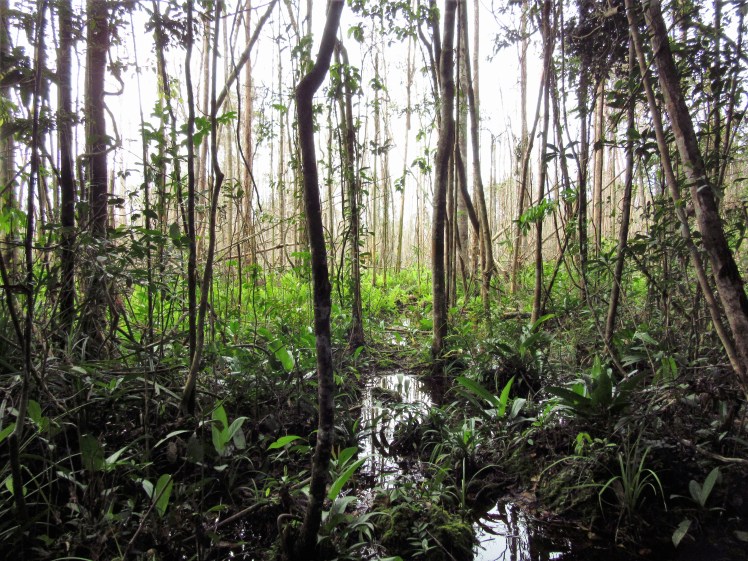
When I received confirmation that I’d be traveling to Borneo as a field assistant at the Tuanan Orangutan Research Project, ‘Borneo’ meant little more to me than it does to any average American – a far-off, exotic, and primitive place, in every way unreachable and unimaginable. Indonesia – the archipelagic country to which Borneo (partly) belongs – meant even less to me. As many can relate, I imagined the ‘-nesia’s’ of the South Pacific as an indistinct conglomerate of tropical islands whose global importance was eclipsed by the cultural giants flanking them: Thailand, Australia, New Zealand… places I knew about and could imagine myself visiting. My friend and soon-to-be research partner, Cecilia, was of South East Asian descent, had studied abroad in Bali and had just been accepted into an intensive Indonesian language program in Java. She could claim genetic, academic, and emotional ties to this place we had committed to live in for a year. In contrast, I was drawn solely to the orangutans.
What’s So Great About Orangutans?
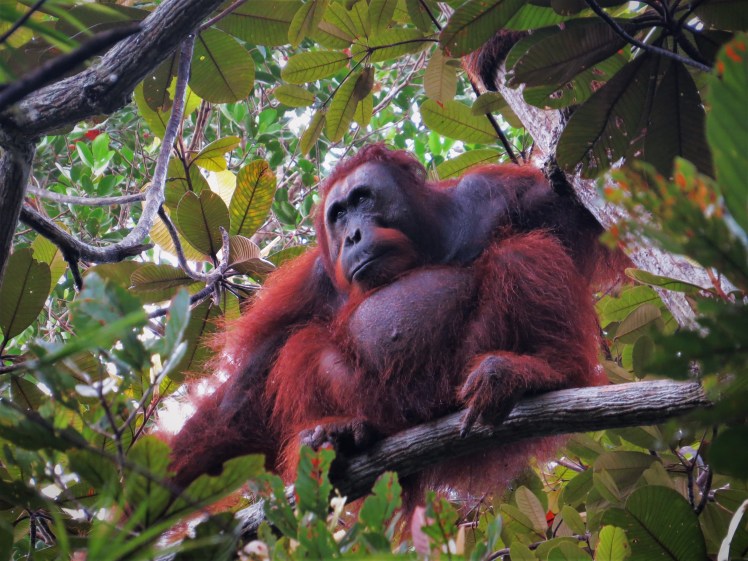
As giant, orange, arboreal, fruit-loving creatures, orangutans had long ranked among my favorite animals in the world. By the time I was half way through college, I’d tuned my love for nature and animals towards the pursuit of physical anthropology. Through my studies, my love of orangutans was affirmed and augmented by new academic appreciation; both members of the Great Ape family, humans and orangutans share 97% of their DNA. Orangutans have the additional distinction of being the only great ape to be found outside of Africa, on the islands of Borneo and Sumatra.
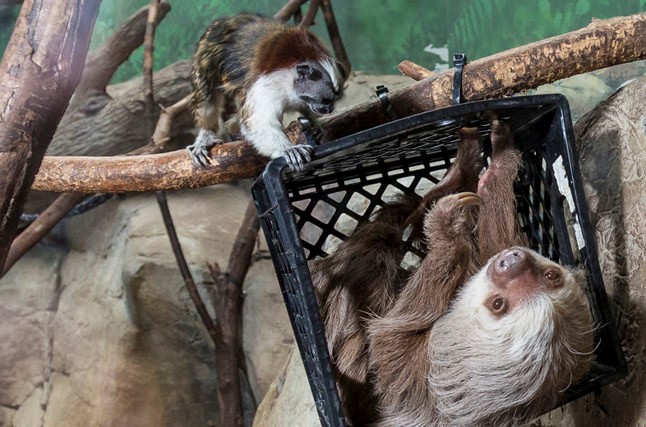
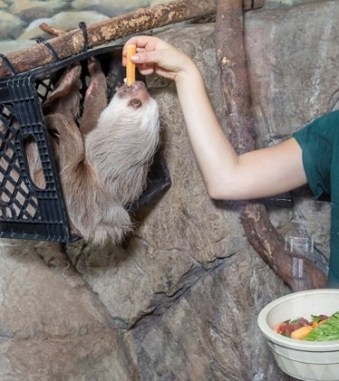
By the first semester of my junior year of college, I’d secured a position as the intern at the primate department of a zoo in Saint Paul, MN. Enthralled by my proximity to so many living primates, I chopped vegetables, washed dishes, scrubbed enclosures and hosed poop with as much enthusiasm as one can muster for such activities. Each primate species was markedly unique: the langurs were imperious and temperamental, the spider monkeys were wild and bellicose, the tamarins were curious and quick, while the sakis seemed kind and gentle. Our resident sloth graced visitors with twice-daily appearances — for meals — when he’d slowly emerge from his milk-crate home (although sloths aren’t technically considered primates, he held a special place in my heart as the department’s only tenant who required me to specially cut, then steam his vegetables before he could eat them). Yet however endearing I found the sloth’s dietary requirements, the bulk of my love and awe was captured—earned—by the zoo’s four Bornean Orangutans.
During a conversation with the zoo’s orang keeper, I asked whether she had ever been to Borneo or Sumatra to see or study orangutans in the wild. She had but added how difficult it had been to do so, restricted by both the physical remoteness of the two islands and by the cultural restrictions; As the world’s most populated Muslim country, it was very hard for foreigners, let alone women, to enter, live and work in Indonesia. I never questioned this. Her words fit with my already established notions of what Borneo and Sumatra were like: dangerous, unreachable.
A Multi-national, Trans-oceanic, and Very Winding Road
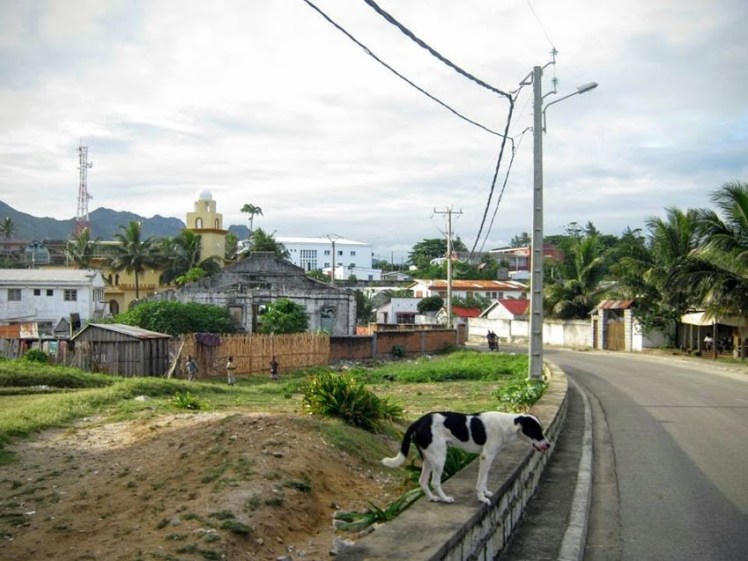
Looking back, it’s clear to see how life’s accomplishments are an equal mix of planning, hard work, and sheer luck. At that time, I could never have predicted that only a year and a half later I’d be getting on a flight to Jakarta, Indonesia, rather than Saint Paul, Minnesota. I finished my internship at the zoo, investing my time in a behavioral study of their two lemurs in preparation for the next semester which I would spend abroad in Madagascar. I’d chosen Madagascar, out of hundreds of possible countries, for its high primate density. The program I’d selected also included a month-long independent research project. So, with last semester’s lemur experience under my belt, I went up into the hills of northwestern Madagascar’s Sahamalaza peninsula. I came down a month later with a first taste of real primate field work, a distaste for white rice (the Malagasy people eat more rice per capita than any other country in the world), and a concrete, conclusive research paper on primate behavior.
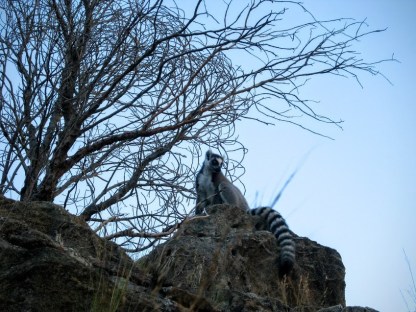
The days I’d spent in rice-fueled pursuit of my elusive research subjects had been, undoubtedly, the hardest of my life to date. However, it is often from the most difficult, sometimes unpleasant situations, that the greatest accomplishments and sense of satisfaction are derived. I knew that I’d welcome the opportunity to do research like that again, if the opportunity ever came my way.
I refined my research and condensed it into poster form for submission to the American Association of Physical Anthroplogists’s 85th annual meeting. It was accepted and so I found myself, in my final semester of college, on a plane to Atlanta, Georgia with my academic adviser and two fellow anthropology majors, Cecilia and Risa.
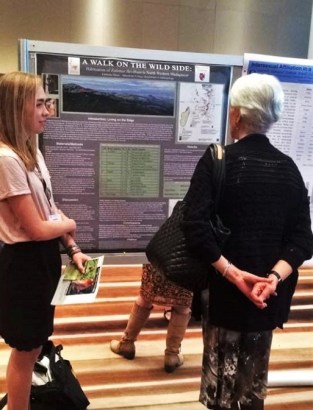
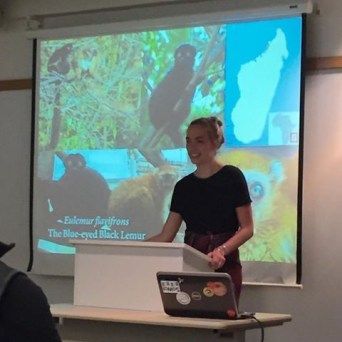
Coming from a small liberal arts college with an even smaller and cultural-centric anthropology department, I can attest to the fact that it took a lot of planning to get myself to the places and experiences that would allow me to study something as specific, obscure, and competitive as primatology. Then it took a lot of hard, hard work at each stage to produce work worthy enough to qualify me to continue. Presenting original research at a national academic conference felt, to me, like the pinnacle of my aspirations. Cecilia, Risa, and I had ‘done it’ and would soon graduate with successful BAs in anthropology. Little could we know that Cecilia’s and my poster – which had been submitted to a juried student poster competition within the conference – would be judged by the same woman: Dr. Erin Vogel. We couldn’t have known, as she independently met and discussed our posters with us, that her field of study was the dietary ecology of wild orangutans. It was only later, at a reception, that our mutual advisor mentioned her research interests in a passing comment, suggesting we go speak with her afterward. We could never have anticipated that she was, at that very moment, searching for a new field assistant for her ongoing research at Tuanan. We could never have anticipated that this year, she was actually looking to send two students to the field (more difficult to fund but better for camaraderie and efficiency). Between the two of us, I’d had field experience in Madagascar while Cecilia was already well-versed in Indonesian culture and language. We made an ideal pair.
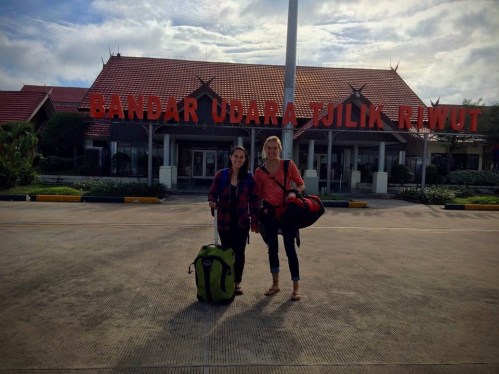
We had approached Dr. Vogel hoping to hear a little bit about her work; we left the conversation in stunned awe that we might, in fact, be a part of it. In under 20 minutes the courses of our lives had been altered and a new academic pinnacle loomed before me. We three students returned to our Motel 6 room that night and, after hours of giddy wakefulness, I finally fell asleep to dreams of tropical forest, equatorial weather, and wild orangutans.